06 October, 2026
Color and surface finish can change how upholstered furniture looks, feels, and performs. The right choice can make a sofa feel warmer, help a dining chair fit the room, or turn a simple wall panel into a feature.
When selecting synthetic leather for home decor, consider more than style. Lighting, daily wear, cleaning needs, and nearby materials all matter. This guide compares the best synthetic leather colors for interiors, explains common finish types, and shows how to choose material for different applications.
Which Synthetic Leather Colors Are Best for Interiors?
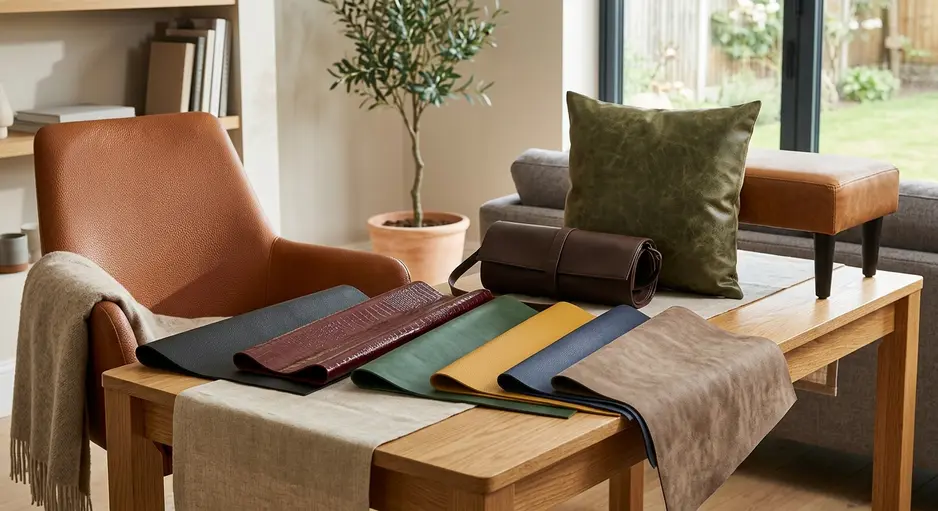
The ideal color depends on the room size, interior style, and expected use. A pale neutral can open up a compact room, while deep brown or charcoal can add weight to a large living area.
- Cream and beige: Best for Scandinavian, coastal, and minimalist rooms. They look light and spacious, but marks may be more visible.
- Tan and cognac: Well suited to rustic, mid-century, and transitional spaces. Check that the undertone complements nearby wood.
- Medium and dark brown: Practical for family rooms and traditional interiors. Very deep brown may feel heavy in a small space.
- Charcoal grey: A strong modern neutral that works with wood, metal, and stone. It may show pale dust or lint.
- Black: Dramatic and refined, but it can dominate rooms with limited natural light.
- Olive and forest green: Natural accent shades for biophilic and eclectic interiors.
- Navy and burgundy: Rich choices for statement chairs, benches, and headboards.
- Rust and terracotta: Warm, energetic shades that work best as selective accents.
Cream and Beige Tones
Ivory, sand, oatmeal, mushroom, and greige create a calm neutral color palette. They pair well with pale wood, linen, stone, and brushed metal. These tones are useful in compact rooms because they reflect more light than dark upholstery.
For pale furniture, cleanability is especially important. Ask for care instructions and check whether the surface is intended for regular residential use.
Warm Brown Shades and Earthy Tones
Camel, tan, cognac, chestnut, and chocolate produce a familiar leather-inspired look. Other earthy tones, including rust, olive, and terracotta, can make a room feel warm without appearing overly traditional.
For example, a cognac sofa with a matte surface works well beside walnut furniture and cream walls. The combination feels warm, balanced, and easy to update with new cushions.
Charcoal, Black, and Bold Accent Colors
A charcoal grey finish is often softer than pure black but still provides strong contrast. For smaller pieces, popular faux leather colors include navy, burgundy, forest green, and burnt orange. In sunny rooms, request lightfastness information before choosing a dark or saturated shade.
What Are the Main Synthetic Leather Finish Types?
Matte Surface for a Natural Look
A matte surface reduces glare and often creates a more natural appearance. It is a versatile choice for sofas, dining chairs, headboards, and synthetic leather for modern home decor.
However, a very flat finish may show oils or rubbing in frequently touched areas. Performance depends on the coating formulation and care routine, not gloss level alone.
Smooth Grain and Glossy Surface
A smooth grain texture creates a clean, simple look. It can be easy to coordinate with modern furniture and is often straightforward to wipe when the care guidance allows it.
A glossy surface adds a bold or retro effect. It works well on statement seating and decorative details, although fingerprints, creases, and scuffs may be easier to see under direct light.
Embossed Texture and Leather Grain Patterns
An embossed texture adds depth and can help disguise small signs of wear. Options may include fine grain, pebbled grain, and deeper leather grain patterns. Choose the scale carefully: subtle embossing suits small chairs, while a larger grain can complement broad sofa panels.
Suede, Metallic, and Specialty Effects
A suede effect has a soft visual character that suits cushions, accent chairs, and wall panels. It may need more careful maintenance than a coated, wipeable surface.
A metallic effect is best used in moderation. Consider it for cabinet inserts, cushions, or a statement panel rather than a full seating group. Quilted, perforated, and patterned faux leather finishes can also add interest to decorative pieces.
How Should Color and Finish Match Your Interior Style?
Modern and Minimalist Rooms
Choose cream, greige, charcoal, black, or muted olive. A matte or fine-grain finish supports clean furniture lines without adding too much visual texture.
Scandinavian and Japandi Interiors
Beige, oatmeal, mushroom, camel, and warm grey work well with oak, ash, linen, and woven fabrics. A soft matte or lightly embossed finish keeps the room relaxed.
Industrial and Contemporary Spaces
Black, charcoal, burgundy, and dark brown complement concrete, steel, and dark wood. Smooth grain, distressed embossing, or controlled gloss can reinforce the stronger style.
Rustic and Mid-Century Homes
Cognac, camel, chestnut, olive, and rust are reliable choices. A pebbled or pronounced grain adds character. Camel dining chairs around a walnut table are a simple example of this combination.
Which Options Work Best for Sofas, Chairs, and Cushions?
Synthetic Leather for Sofas
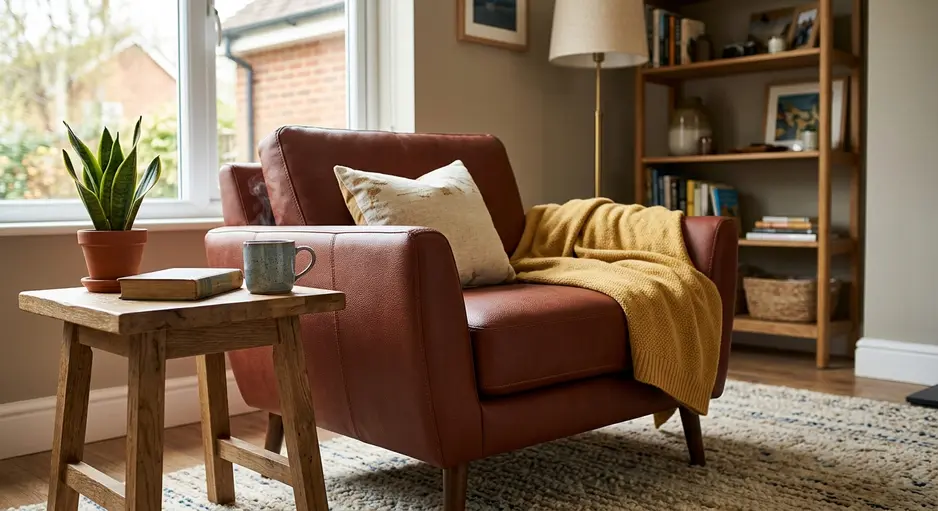
Tan, taupe, charcoal, and mid-brown are flexible options for synthetic leather for sofas. These mid-tones tend to hide everyday dust and minor marks better than very pale or extremely dark colors.
For a sofa, prioritize abrasion resistance, flex performance, coating adhesion, colorfastness, and an easy clean upholstery surface. Confirm that the specific material is recommended for seating rather than decorative use.
Synthetic Leather for Chairs
Dining chairs benefit from smooth or lightly embossed surfaces that can be cleaned according to the supplier’s instructions. Office chairs often suit matte or fine-grain material because it limits glare. Accent chairs provide more freedom to use olive, navy, burgundy, or terracotta.
Synthetic Leather for Cushions and Panels
Synthetic leather for cushions can feature stronger color or texture because cushions are easy to replace or move. Decorative synthetic leather also works on headboards, benches, ottomans, wall cladding, and cabinet inserts. Metallic, quilted, perforated, and suede-effect finishes are most effective in these smaller applications.
How Do You Choose a Durable, Easy-Clean Finish?
Check More Than Abrasion Resistance
A high abrasion figure does not tell the whole story. Test results should be reviewed with the method, intended application, and supplier guidance. Organizations such as the Association for Contract Textiles, the Chemical Fabrics and Film Association, and ASTM International publish relevant performance guidance and test methods.
Ask for available information about:
- Abrasion method and test result
- Flex and crack resistance
- Coating adhesion
- Colorfastness to light and rubbing
- Hydrolysis resistance, where relevant
- Backing composition and stability
- Approved cleaning methods
- Relevant flammability or chemical documentation
Consider Sunlight, Heat, and Daily Wear
Prolonged sunlight may cause fading or surface changes in some products. Smooth material can reveal scratches, while deep embossing may hold dust if it is not cleaned regularly. Pale shades also need more consistent stain management.
No synthetic upholstery should be assumed to be pet-proof, stain-proof, waterproof, or peel-resistant without supporting product information. Results vary by construction, use, environment, and maintenance.
Is PU or PVC Better for Furniture?
Neither material is automatically superior. PVC synthetic leather for interiors is often considered when cleanability and robust surface performance are priorities. PU options may be selected for softness and drape.
The better choice depends on the complete specification, including coating quality, backing, comfort, testing, intended use, and care requirements. Compare actual samples and technical data rather than relying only on the material name.
How Can Buyers Select the Right Color and Supplier?
Follow a Five-Step Process
- Define the application and expected level of use.
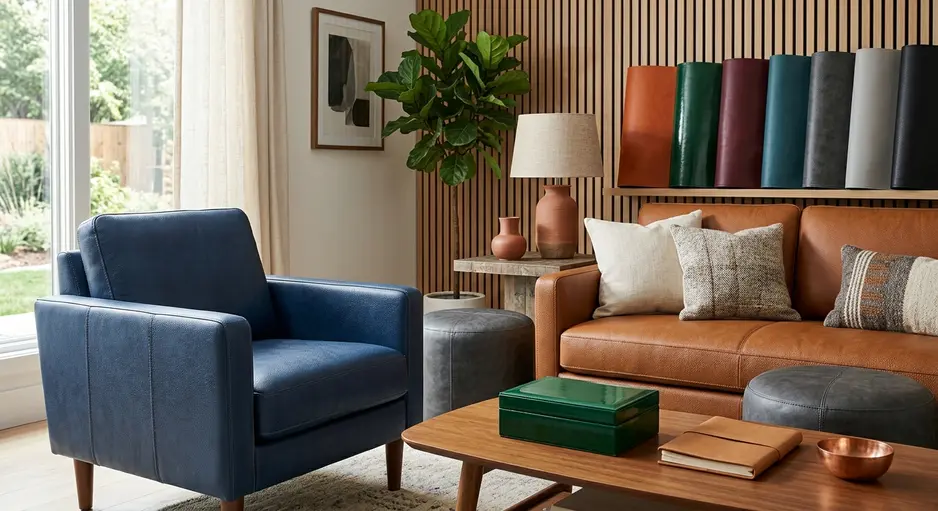
- Shortlist colors that suit the walls, floor, wood, and metal finishes.
- Select a texture based on wear and cleaning needs.
- Request physical swatches or larger sample cuts.
- Review samples in daylight and artificial light before ordering.
Small digital samples cannot show exact color, sheen, softness, or grain scale. Place a physical swatch beside existing materials and view it at different times of day.
Questions to Ask a Manufacturer or Exporter
- Is the material recommended for residential upholstery?
- What are its width, thickness, backing, and roll specifications?
- Which performance tests have been completed?
- Are custom faux leather colors or embossed finishes available?
- Which cleaners should be avoided?
- What is the minimum order quantity?
- Can separate production lots be color-matched?
- Which documents are available for the destination market?
Buyers can contact suppliers such as Rock Uniquoters to discuss available synthetic leather colors and finishes, specifications, samples, and intended applications. Any selection should be based on current product details supplied for the material being considered.
Best Synthetic Leather Colors and Finishes
Make the Final Choice With Confidence
The best synthetic leather colors and finishes combine visual appeal with performance suited to the application. Warm neutrals, earthy browns, and charcoal offer flexibility, while bold colors work well on accent pieces. Matte and embossed surfaces create a natural look; glossy, metallic, and suede effects add character in smaller areas.
Before ordering, compare physical samples, review technical information, and confirm upholstery suitability. This simple process helps create interiors that look cohesive and remain practical for daily life.
Frequently Asked Questions
1. What is the most popular faux leather color for furniture?
Tan, cognac, beige, brown, charcoal, and black remain versatile choices. The best option depends on room size, available light, and surrounding materials. Mid-tones are often practical because they are less likely to show every speck or mark.
2. Which synthetic leather finish looks most natural?
A matte or low-sheen finish with a fine embossed grain often looks the most natural. Softness, grain scale, and subtle color variation also affect realism.
3. What color is easiest to maintain?
Taupe, tan, medium brown, and charcoal tend to be more forgiving than very light or very dark shades. Actual cleanability depends on the surface coating and approved care method.
4. Is synthetic leather good for upholstery?
Yes, when the material is specified for upholstery and has suitable performance data. For synthetic leather for furniture, review abrasion, flexing, adhesion, colorfastness, and cleaning guidance before purchase.
5. Is matte or glossy faux leather better?
Matte material suits natural and understated interiors while producing less glare. Glossy material makes a stronger design statement but may show fingerprints, scuffs, and wrinkles more clearly.