02 October, 2026
Sri Lankan furniture makers, automotive suppliers, footwear factories, and importers need materials that look consistent and perform well. Colour and price matter, but they are only part of the buying decision. Construction, backing, finish, strength, and cleaning performance can all affect the finished product.
Working with a faux leather manufacturer in India can give buyers access to practical customisation and regional shipping options. Before choosing a faux leather exporter to Sri Lanka, buyers should compare samples, technical specifications, order terms, and export documents. This guide explains the main points to review before placing an order.
Why Source Faux Leather from India?
Product Variety and Customisation
Different products need different surfaces. A sofa may require a soft, matte finish, while a handbag may need a firmer surface with a defined grain. Buyers can specify an embossed leather texture, smooth leatherette surface, matte leather finish, or glossy leather finish based on the final use.
Other variables may include colour, roll width, thickness, hand feel, backing, and surface grain. Colour matching is especially important when the material must fit an existing collection or brand palette. Buyers should approve a physical colour sample because screens and printed references may not show the exact shade.
Proximity to Sri Lankan Buyers
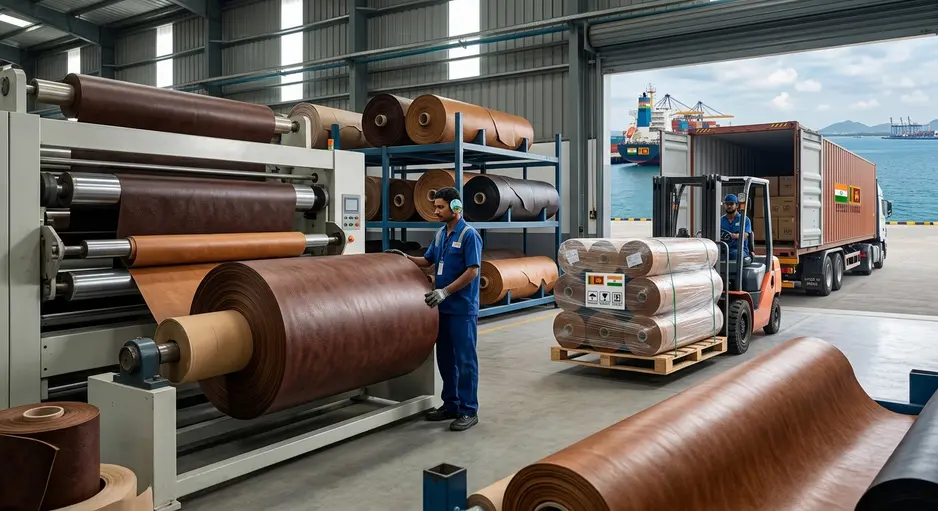
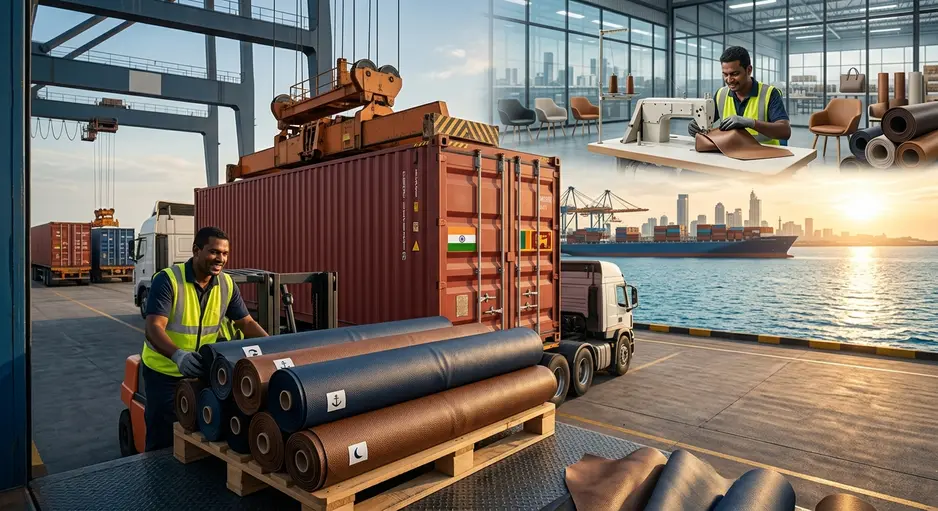
India’s location can support practical sea freight access to Colombo. A shorter regional supply route may also make sample coordination and repeat ordering easier than sourcing from a distant market. Actual transit times still depend on production, inland movement, vessel schedules, port handling, and customs clearance.
Supply for Several Industries
PVC synthetic leather is used by furniture producers, upholstery wholesalers, vehicle-interior businesses, bag makers, and footwear factories. However, one grade will not suit every use. The construction should match the level of wear, bending, heat, light, and cleaning expected in service.
How Is PVC Synthetic Leather Manufactured?
Coated Fabric Construction
PVC faux leather generally has several layers. These may include a textile backing, a PVC coating or foam layer, a coloured surface, an embossed grain, and a protective topcoat. Each layer contributes to the appearance and performance of the artificial leather material.
The backing provides support during cutting, sewing, and use. Coating thickness affects weight, feel, and durability. The formulation can influence flexibility and ageing, while the topcoat helps manage scuffing, staining, and cleaning. Reliable coated fabric construction requires control of all these elements.
Surface and Finish Options
The surface can be smooth, printed, or embossed to create a leather-like grain. A matte surface gives a softer visual effect, while a glossy surface creates more shine. Hand feel may range from soft and flexible to firm and structured. The right choice depends on how the material will be cut, stitched, folded, and used.
PVC vs PU Faux Leather
PVC is commonly considered for cost-sensitive upholstery and easy-clean applications. PU may offer a softer feel for fashion products or selected premium interiors. However, the polymer name alone does not confirm quality. Formulation, backing, coating adhesion, thickness, and production control all affect performance.
Buyers should test both options under real conditions instead of relying only on a catalogue description. Claims such as “eco-friendly,” “non-toxic,” or “waterproof” should be supported by relevant reports and a clear test scope.
Which Faux Leather Is Best for Your Application?
Faux Leather for Furniture Upholstery
Faux leather for furniture is used on sofas, dining chairs, headboards, office seating, and decorative panels. Important features include abrasion resistance, tear resistance, seam strength, colour fastness, and a comfortable hand feel. An easy clean surface is also useful in homes, restaurants, and waiting areas.
The required grade depends on use. A decorative headboard receives little rubbing, while a restaurant chair faces frequent contact, spills, and cleaning. For demanding furniture upholstery applications, buyers should define cleaning methods and expected usage before choosing a material.
Faux Leather for Automotive Interiors
Faux leather for automotive interiors may be used for seat covers, door trims, dashboard accents, and aftermarket accessories. Buyers should examine flex resistance, surface adhesion, abrasion performance, odour, and colour consistency. Heat and light stability are also important inside vehicles.
Automotive interior applications may require tests set by the vehicle maker or component supplier. A general upholstery test report may not meet those requirements. The buyer should provide the required method and acceptance level during the enquiry stage.
Faux Leather for Bags and Footwear
Faux leather for bags and footwear must tolerate stitching, folding, shaping, and regular handling. Useful properties include tear strength around seams, flexibility, scuff resistance, and surface recovery. The material should also work with the intended adhesive, foam, lining, or lamination process.
Thickness and backing affect how the material behaves during production. A heavy grade may be suitable for a structured bag but too stiff for a flexible shoe component. A trial on the actual cutting and sewing line can reveal issues before bulk purchasing.
PVC Leather for Commercial Upholstery
PVC leather for upholstery can be considered for hotels, offices, clinics, shops, and public seating. These settings may have added requirements for fire behaviour, chemical resistance, or antimicrobial performance. Such features should never be assumed. Ask for reports that identify the test method, tested sample, and result.
What Specifications Should Sri Lankan Buyers Check?
Abrasion, Tear, and Flex Resistance
- Abrasion resistance measures how the surface handles repeated rubbing and wear.
- Tear resistance indicates how well the material limits the spread of a cut or puncture.
- Flex resistance measures its ability to withstand repeated folding or bending.
Common references include ISO 12947 for Martindale abrasion, ISO 4674-1 for tear resistance, ISO 7854 for flex testing, and ASTM D4157 for Wyzenbeek abrasion. There is no single pass value for every product. Test methods and targets should match the application.
Colour and Surface Performance
Colour fastness can be checked against rubbing, light, perspiration, or other exposure relevant to the end product. The ISO 105 series includes several colour-fastness methods. Buyers may also request testing for coating adhesion, cleaning-agent resistance, scratches, and scuffs.
A result is meaningful only when the method and acceptance criteria are clear. Ask whether the report covers the same grade, colour, backing, and finish offered for the order.
Thickness, Width, Weight, and Backing
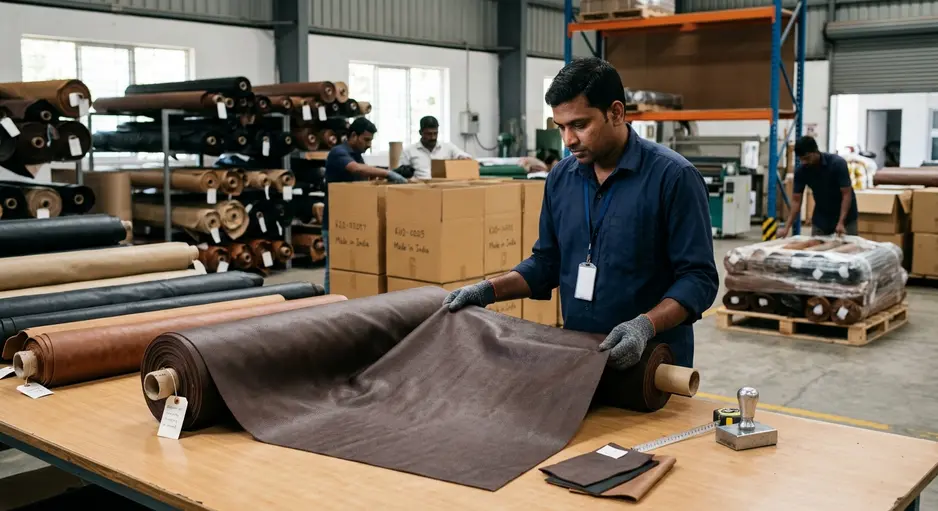
An RFQ should state the total thickness and tolerance, roll width, usable width, weight per square metre, backing composition, and roll length. It should also define acceptable defects and how short rolls or visible flaws will be handled.
Performance in Sri Lanka’s Climate
Heat and humidity can place added stress on upholstery material. For demanding uses, ask for relevant ageing and coating-adhesion data. Mould or mildew resistance should be specified when required. Vehicle materials should be assessed in conditions that reflect high cabin temperatures and light exposure.
How Does Exporting Faux Leather to Sri Lanka Work?
Sample Approval and Quotation
- Share the intended application and performance needs.
- Select the colour, grain, finish, backing, and thickness.
- Review and approve a physical sample or colour development.
- Confirm tolerances, roll size, packaging, and minimum order quantity.
- Request a written quotation with the agreed trade terms.
A synthetic leather exporter to Sri Lanka needs enough information to recommend a suitable grade. Sending only a colour reference and required quantity may lead to an inaccurate quotation.
FOB, CFR, and CIF Options
Under FOB terms, the buyer manages the main freight after the goods are loaded as agreed. CFR includes the cost of ocean freight to the named port but not insurance. CIF includes freight and minimum insurance to the named port. The chosen Incoterm, named location, and agreed version should appear on the quotation and purchase order.
Common Export Documents
- Commercial invoice
- Packing list
- Bill of lading
- Certificate of origin, when applicable
- Insurance document under relevant terms
- Buyer-requested test reports
- Product description and HS code
Classification can vary with the backing, coating, composition, and construction. Products may fall under headings such as 5903 or 3921, but buyers should not assume a code. Confirm it with Sri Lanka Customs or a licensed customs broker before shipment. Current duties, taxes, and rules of origin should also be checked before calculating landed cost.
How Do You Evaluate a Faux Leather Supplier?
Check Manufacturing Controls
Ask how the supplier inspects raw materials, controls coating, checks thickness, and manages shade consistency. Useful controls include roll inspection, batch identification, defect grading, and final packaging checks.
Request Evidence
A dependable artificial leather supplier should be able to discuss specifications in clear terms. Request technical data sheets, relevant laboratory reports, sample references, written tolerances, restricted-substance declarations when needed, and warranty or claim conditions.
Review Commercial Capability
Confirm the minimum order per colour and design, sample lead time, production estimate, packaging method, and repeat-order process. Ask how colour variation and claims are handled. Be cautious if one product is presented as suitable for furniture, vehicles, footwear, and outdoor use without grade-specific testing.
Sourcing from Rock Uniquoters for Sri Lanka
Buyers considering Rock Uniquoters can begin by sharing a complete requirement through the company website. The enquiry should explain the application, required quantity, delivery location, preferred colour, surface finish, backing, thickness, and performance needs.
Request a suitable sample and written export quotation before placing a bulk order. Buyers should also confirm the minimum order, production estimate, packaging, Incoterm, document requirements, and applicable testing directly with the company. This approach allows Rock Uniquoters to review the request without assuming that a standard grade will fit every application.
Request a sample or quotation: Include a reference swatch or colour code when possible, along with details of how the material will be sewn, cleaned, and used.
Faux Leather Manufacturer & Exporter to Sri Lanka
Choose the Right Material Before You Order
Selecting a faux leather manufacturer in India requires more than comparing colours and unit costs. Match the coated fabric to its final use, define measurable specifications, test a sample, and confirm export terms in writing.
For supply to Sri Lanka, share complete application and delivery details with Rock Uniquoters. A clear RFQ can help identify suitable samples, reduce misunderstandings, and support a more accurate export quotation.
Frequently Asked Questions
1. What is the difference between faux leather and synthetic leather?
Both are broad terms for materials made to resemble leather. They commonly use PVC or PU over a textile backing. Construction and performance differ between grades.
2. Is PVC faux leather suitable for furniture?
Yes, when the grade provides suitable wear, tear, seam, cleaning, and colour performance for the intended furniture use. Commercial seating usually needs stronger performance than decorative pieces.
3. Can faux leather be used in automotive interiors?
Yes, but it should be assessed for heat, light, flexing, abrasion, adhesion, and odour. Vehicle makers or component suppliers may require additional tests.
4. Does faux leather crack or peel in humid weather?
Failure may result from poor formulation, weak coating adhesion, high heat, UV exposure, ageing, or unsuitable cleaners. Request relevant test data and follow the approved care instructions.
5. How should PVC upholstery be cleaned?
Follow the supplier’s care instructions. Mild soap and a soft damp cloth are often used, while solvents, abrasives, and unapproved chemicals should be avoided.