08 September, 2026
Choosing durable faux leather for automotive industry projects in Kenya takes more than comparing color and price. Vehicle interiors face strong sunlight, high cabin temperatures, dust, spills, and frequent cleaning. Matatus, buses, taxis, fleet vehicles, and private cars may also experience heavy daily use.
Kenyan buyers should compare the material construction, backing, topcoat, test data, and intended application before ordering. This guide explains the differences between PU and PVC, key performance tests, customization options, supplier checks, and practical steps for importing automotive upholstery material.
What Should Kenyan Buyers Expect from Automotive Faux Leather?
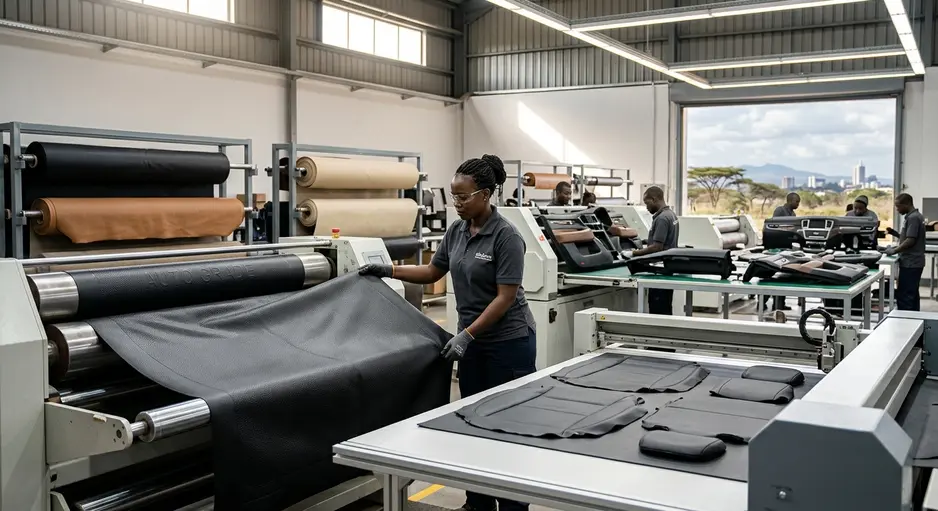
Automotive synthetic leather is designed for vehicle interiors. It should not be selected only because it looks similar to material used for furniture, clothing, or decorative products. Vehicle upholstery must cope with movement, body heat, sunlight, cleaning products, and repeated contact.
Common Automotive Interior Applications
Automotive faux leather can be considered for several interior components, depending on its construction and test results:
- Car seats, seat covers, headrests, and armrests
- Door panel upholstery and center consoles
- Dashboard covering and interior trim
- Steering wheel accents
- Bus, matatu, taxi, and fleet seating
- Safari, utility, and institutional vehicles
Seat bases and side bolsters often receive more friction than headrests or low-contact panels. A single material may not be the best choice for every part of the cabin.
Performance Needs in Kenyan Conditions
Strong UV exposure may cause fading, hardening, or surface damage in poorly formulated upholstery. Heat inside a parked vehicle can also affect the coating, foam, and adhesive. At the coast, humidity adds another concern, especially during storage.
Commercial interiors need an easy-clean surface with good stain resistance. Dust, food, drinks, oil, and perspiration can quickly affect appearance. Buyers should also consider abrasion resistance, color fastness, flex durability, and resistance to repeated cleaning.
Why Is Faux Leather Suitable for Vehicle Interiors?
Faux leather can offer a consistent grain, broad color choice, simple maintenance, and scalable production. It may also provide a practical cost structure for large vehicle or seat-cover projects. Custom embossing, perforation, backing, and lamination may be possible when minimum order and production requirements are met.
These benefits do not mean every synthetic material will outperform genuine leather. Suitability depends on formulation, installation, care, and verified performance.
PU vs. PVC Automotive Leather: Which Is Better?
PU automotive leather is often chosen for a soft feel and a more leather-like surface. PVC automotive leather is often considered for easy cleaning, heavy-use projects, and cost-controlled interiors. However, material names alone do not prove quality.
PU Automotive Leather
- Feel: Often softer and more flexible.
- Appearance: Commonly selected when grain and hand feel are priorities.
- Applications: Passenger seats, comfort areas, headrests, and flexible trim.
- Key checks: Hydrolysis resistance, flex performance, heat aging, and surface wear.
PU may suit premium-looking passenger interiors, but buyers should request evidence that the grade is intended for automotive interior applications. General-purpose PU may not provide the required service life.
PVC Automotive Leather
- Feel: Often firmer, although this varies by formulation.
- Maintenance: Commonly selected where frequent cleaning is expected.
- Applications: Fleet seats, commercial vehicles, buses, and high-use covers.
- Key checks: Flexibility, plasticizer stability, UV performance, and heat aging.
PVC may be suitable for demanding interiors, but poor construction can still crack, fade, or become stiff. The topcoat, backing, thickness, and manufacturing controls all affect performance.
Is PU or PVC Better for Car Seats in Kenya?
Neither is automatically better. Choose according to vehicle type, passenger traffic, cleaning routine, expected lifespan, and cabin conditions. Compare tested samples rather than relying on labels such as “premium” or “heavy-duty.”
Essential Performance Tests for Car Seat Leather
Technical data helps buyers compare materials on the same basis. Test methods should be agreed upon before bulk production because results from different methods may not be directly comparable.
Abrasion Resistance and Flex Durability
Drivers and passengers slide across seat surfaces whenever they enter or leave a vehicle. This repeated movement can wear away the topcoat and expose the layer below. Seat folds and stitched areas also bend thousands of times during use.
Request the abrasion test method and result rather than accepting a general “abrasion-resistant” claim. ISO 12947 may be relevant for certain abrasion evaluations, while ISO 7854 may be used for flex resistance in coated fabrics. Confirm that the selected method fits the product and project.
Inspect tested samples for peeling, cracking, whitening, loss of grain, or coating separation. Driver seats, matatus, buses, and taxis deserve particular attention.
Tensile Strength and Tear Resistance
Tensile strength indicates how the coated fabric responds when pulled. Tear resistance helps show how an existing cut or puncture may spread. These properties matter around seams, fasteners, sharp corners, and areas under installation tension.
ISO 1421 may be referenced for tensile properties of coated fabrics, while ISO 4674 may be relevant to tear testing. Buyers should also assess the backing fabric, stitch retention, stretch recovery, and seam design.
UV, Heat, and Color Fastness
Ask how the material performs after UV and heat-aging exposure. Look for fading, surface hardening, gloss change, cracking, and loss of flexibility. Color fastness checks should also address rubbing, dye transfer, and cleaning.
Shade consistency is important for repeat orders. Record an approved master sample and define acceptable color tolerances before production.
Hydrolysis and Stain Resistance
Hydrolysis can weaken certain coatings after exposure to heat and moisture. This is especially important for PU products, humid storage, coastal locations, and surfaces exposed to perspiration.
Stain trials should use substances that reflect the actual vehicle environment. Buyers can test water, common drinks, light oils, dust, and approved cleaners on sample yardage. The test should also show whether cleaning changes the gloss or color.
Does Automotive Faux Leather Need a Flammability Test?
Vehicle manufacturers, importers, and fleet projects may require evidence against a specified interior material flammability method. ISO 3795 and FMVSS 302 are common references, but one standard does not automatically apply to every Kenyan project.
Confirm the required method with the vehicle assembler, buyer, regulator, or project owner. The report should identify the sample, thickness, backing, color, test date, method, and result.
Matching Material to the Interior Application
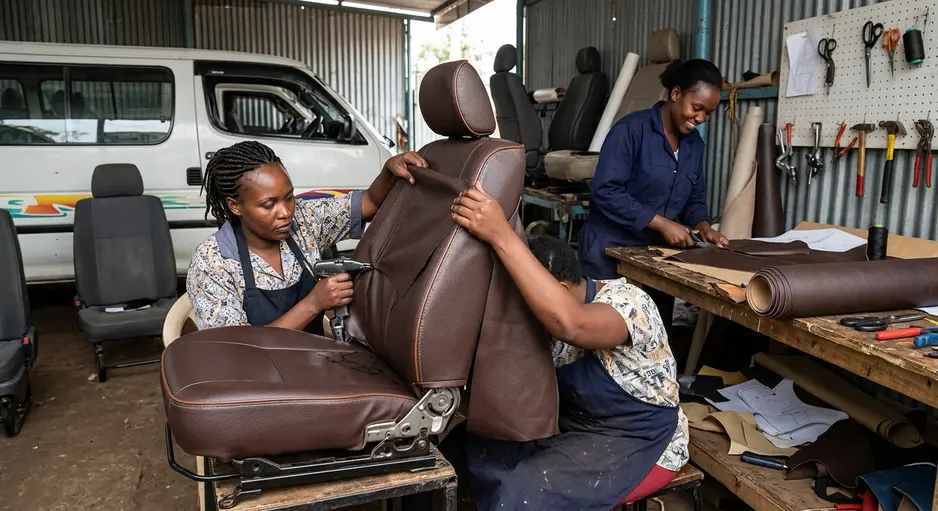
Faux Leather for Vehicle Seat Covers in Kenya
Material for private cars may focus on comfort, grain, color, and cabin heat. Taxi and fleet operators may place more weight on cleaning convenience and replacement cost. Matatus and buses usually need strong abrasion, tear, seam, and stain performance.
Safari and utility vehicles may face dust, equipment contact, and frequent entry. In each case, test the seat upholstery material over the actual foam and with the planned sewing pattern.
Dashboard and Door Panel Upholstery
Dashboard covering needs heat stability, controlled stretch, and adhesive compatibility. Door panels may require foam lamination, clean edge wrapping, and dimensional stability. The supplier should know the intended process before recommending a construction.
Material that works on a seat may not bond or form correctly over a complex trim panel. Trial cutting, gluing, heating, and wrapping can prevent costly problems during production.
Perforated Upholstery Material
Perforation can improve appearance and may support airflow when used with a suitable seat construction. Confirm the hole size, spacing, pattern, and production stage. Buyers should also check tear resistance near holes and compatibility with the foam and backing.
How to Evaluate a Faux Leather Manufacturer
A buyer searching for a faux leather manufacturer for car interiors in Kenya or an automotive faux leather supplier for Kenyan buyers should begin with documentation and samples. A website description is not a substitute for product-specific evidence.
Ask for Technical Data
- Material composition and intended application
- Total thickness, tolerance, and usable roll width
- Roll length and backing type
- Abrasion, flex, tensile, and tear results
- UV, heat-aging, and color fastness data
- Hydrolysis and stain-resistance information
- Flammability data where required
- Applicable chemical or restricted-substance documents
Approve Samples Before Bulk Production
- Request swatches or enough yardage for a working trial.
- View the color in daylight and under cabin lighting.
- Test cutting, sewing, stretching, gluing, and perforating.
- Conduct practical stain and cleaning trials.
- Record the approved grain, shade, backing, and thickness.
- Confirm bulk tolerances and inspection terms in writing.
Check Production and Export Support
Ask about minimum order quantities, trial orders, lead times, quality checks, packing, and roll protection. If customization is needed, confirm available colors, grains, embossing, lamination, and perforation before paying for bulk production.
Buyers should also understand the process for reporting defects. Agree on inspection timing, evidence requirements, and how valid complaints will be handled.
What Questions Should You Ask a Supplier?
- Which grade fits the vehicle and interior component?
- What test methods and results are available?
- Can the material handle the expected heat and cleaning routine?
- What are the usable width, roll tolerance, and minimum order?
- Will bulk production match the approved sample?
- What are the production, packing, and shipment terms?
Importing Bulk Automotive Leather to Kenya
Compare Landed Cost, Not Only Price per Metre
The lowest unit price may not deliver the lowest project cost. A landed-cost review can include sampling, customization, freight, insurance, duties, taxes, inspection, clearance, inland transport, and inventory costs.
Usable width also matters. Defects, uneven edges, or inconsistent roll lengths can increase waste. Compare the cost per usable area and expected cutting yield.
Confirm Kenyan Import Requirements
Importers should verify current requirements with the Kenya Bureau of Standards, an authorized PVoC provider, customs authorities, and a licensed clearing professional. Confirm tariff classification, conformity procedures, shipping documents, and whether a Certificate of Conformity is required before dispatch.
Avoid relying on old duty rates or previous shipments. Product classifications and import procedures can change.
Work with an Export-Ready Supplier
An automotive synthetic leather exporter to Kenya should be prepared to issue accurate invoices, packing lists, product descriptions, roll details, and requested origin or conformity documents. Buyers should confirm these capabilities rather than assume they are included.
Practical Ways to Extend Upholstery Life
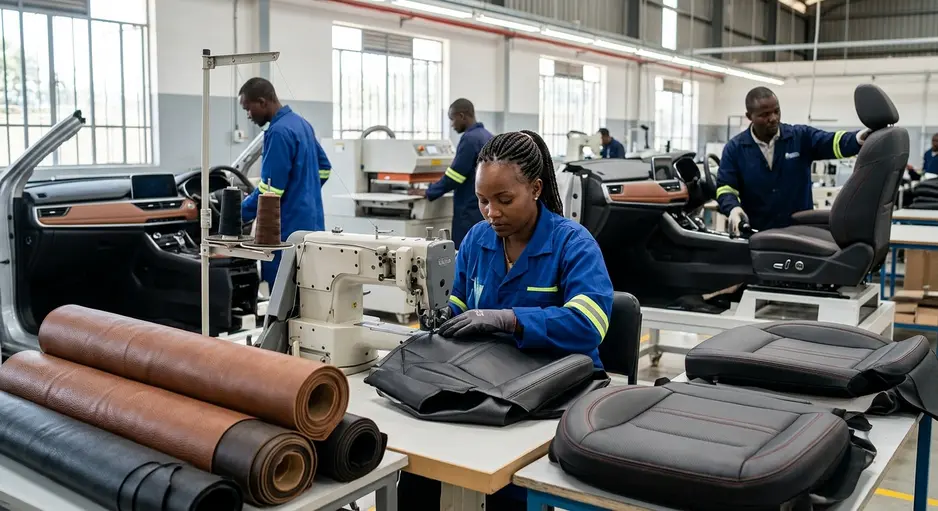
Specify the material by use. A matatu or bus needs strong wear, tear, seam, and cleaning performance. A private vehicle may place more value on comfort and appearance. Dashboard and door panel projects require close attention to adhesive, stretch, and heat stability.
Test the complete upholstery system. Early failure may come from foam, thread, adhesive, installation tension, sharp seat-frame edges, or harsh cleaners rather than the faux leather alone.
- Wipe spills promptly.
- Use pH-neutral cleaners recommended for the material.
- Avoid solvents, bleach, and abrasive brushes unless approved.
- Test each cleaner on a hidden area.
- Follow the care instructions supplied for the approved grade.
Contacting Rock Uniquoters
Kenyan buyers may contact Rock Uniquoters through its provided website to ask about available automotive faux leather, samples, specifications, customization, minimum orders, and shipping information. Request current product documents and test reports for the exact grade under consideration before placing an order.
Faux Leather Manufacturer in Kenya
Choose Automotive Faux Leather with Evidence
A dependable faux leather manufacturer in automotive industry sourcing should provide more than an attractive grain. Kenyan buyers need a material suited to local heat, sunlight, dust, cleaning, and passenger use.
Define the application, compare PU and PVC constructions, request relevant test data, and test samples over the complete seat or trim system. Careful approval and clear import planning will help reduce waste, avoid mismatched materials, and support longer-lasting vehicle interiors.
Frequently Asked Questions
1. What Is the Best Faux Leather for Car Seats in Kenya?
The best option depends on the vehicle, daily passenger traffic, sunlight, cleaning routine, and desired appearance. Compare PU and PVC samples using relevant abrasion, flex, tear, heat, UV, stain, and hydrolysis data.
2. Is PU Leather Durable Enough for Automotive Upholstery?
High-quality PU may be suitable when its backing, topcoat, and formulation meet the project needs. Ask for product-specific abrasion, flex, UV, heat, and hydrolysis results instead of judging durability by surface feel.
3. Is PVC Automotive Leather Good for Matatus and Buses?
PVC may suit frequent-use, easy-clean interiors, but performance depends on its construction. Check abrasion, tear, flex, heat, UV, seam, and stain results before selecting it for public service vehicles.
4. How Thick Should Automotive Faux Leather Be?
There is no universal ideal thickness. Backing strength, coating construction, stretch, application, and tested performance can be more useful than thickness alone. A thicker product is not always more durable.
5. Can Automotive Faux Leather Be Customized?
Possible options may include color, grain, backing, thickness, embossing, lamination, perforation, and branding. Availability depends on technical feasibility, production capability, minimum order quantity, and lead time.