05 October, 2026
Synthetic leather is widely used in Russian furniture, automotive interiors, footwear, bags, and commercial spaces. Yet appearance alone does not make a material premium. Buyers should compare its construction, surface quality, physical performance, and suitability for the final product.
When choosing a synthetic leather exporter to Russia, importers should review samples, specifications, test reports, customization options, and export support. This guide explains how to assess a premium synthetic leather exporter from India and compare products offered by a synthetic leather supplier in Russia or an overseas partner.
What Should Russian Buyers Look for in Synthetic Leather?
What makes synthetic leather premium?
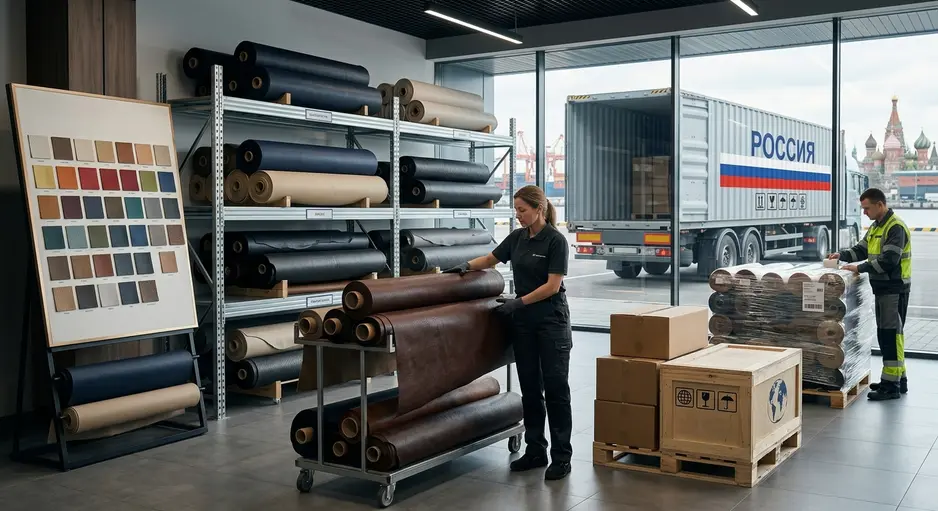
Premium synthetic leather should provide more than an attractive colour or realistic grain. Its thickness, usable width, shade, texture, and coating must remain consistent throughout each roll. Repeat orders should also match the approved reference sample within an agreed tolerance.
Important performance factors include abrasion resistance, tear resistance, flex resistance, coating adhesion, colour fastness, and dimensional stability. For Russian conditions, buyers may also need evidence of low-temperature flexibility and resistance to cracking.
Other useful indicators include low odour, an easy clean surface, good surface recovery, and a backing suited to cutting and stitching. Chemical requirements should be agreed according to the market and intended application.
Match the material to its end use
A material developed for handbags may not work for vehicle seats or busy hospitality furniture. Every application places different stress on the coating and backing. Buyers should prepare a written specification before requesting a quotation.
PVC vs. PU: Which Artificial Leather Is Better?
PVC coated leather
PVC coated leather is a durable coated fabric available in many colours, grains, thicknesses, and finishes. It can provide a practical, easy-clean surface and is commonly considered for upholstery, footwear, bags, accessories, and commercial interiors.
The performance of PVC synthetic leather in Russia depends on more than its polymer type. The plasticizer system, coating layers, backing fabric, total thickness, and intended temperature range can all affect softness, strength, and cold-weather performance.
PU and other leatherette fabric options
PU leatherette fabric may offer a softer hand feel and more flexible drape. These qualities can suit fashion products, soft upholstery, and applications where comfort or a refined surface is important.
However, not all PU products perform in the same way. Buyers should check coating adhesion, abrasion results, hydrolysis resistance, and cleaning requirements. The construction must match the conditions in which the finished product will be used.
Is PVC or PU leather better for cold climates?
Neither should be selected by polymer name alone. Ask for cold-crack or low-temperature flex data at the expected service temperature. Coating formulation, plasticizers, backing construction, and repeated flexing can influence whether artificial leather material stays flexible or begins to crack.
- PVC: Often chosen for durability, cleaning ease, and broad customization.
- PU: Often considered when softness, drape, and surface feel are priorities.
- Final choice: Base approval on samples and agreed test results.
Synthetic Leather Applications in Russia
Synthetic leather for furniture
Synthetic leather for furniture is used on sofas, chairs, office seating, headboards, and hospitality furniture. Suitable upholstery material should resist rubbing, tearing, seam stress, stains, and repeated cleaning.
Design choices include an embossed leather texture, a smooth leather surface, or a fine upholstery grain. A matte finish may create a subtle look, while a glossy finish can suit decorative furniture. Colour consistency is especially important when several rolls are used on one production run.
Synthetic leather for automotive interiors
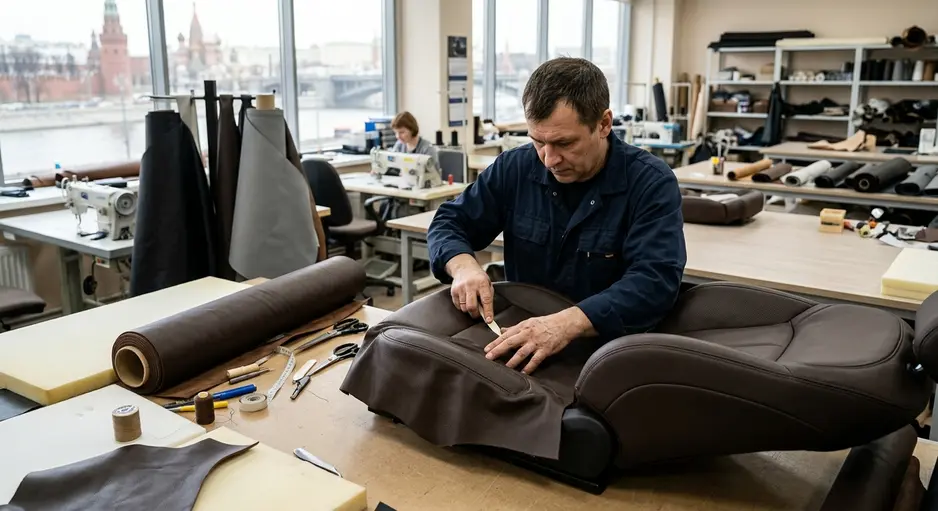
Synthetic leather for automotive interiors may be considered for seat covers, door panels, consoles, and trim parts. Automotive upholstery can face repeated rubbing, heat, cold, body contact, and frequent cleaning.
Buyers should define requirements for abrasion, flexing, colour fastness, odour, fogging, flammability, and temperature exposure where relevant. A product should not be described as “automotive grade” unless it has passed the required OEM, Tier supplier, or customer-specific tests.
Synthetic leather for footwear
Synthetic leather for footwear may be used in uppers, linings, sandals, and decorative parts. Repeated bending makes flex resistance critical. Tear strength, scuff resistance, coating adhesion, stitch performance, and the choice of backing also affect service life.
Synthetic leather for bags
Synthetic leather for bags is used in handbags, backpacks, travel goods, wallets, belts, and accessories. Buyers should assess cutting yield, edge finishing, stitch strength, peel resistance, and texture consistency. The material should also hold its shape without becoming difficult to sew.
A sofa producer may place the greatest value on abrasion and cleaning performance. A footwear producer may focus on repeated flexing. The same material should not be approved automatically for both applications.
Technical Specifications and Quality Tests to Request
Essential physical specifications
A complete specification reduces misunderstandings and makes quotations easier to compare. Ask the supplier to confirm the following points in writing:
- Total thickness and permitted tolerance
- Full width and usable coated width
- Roll length, weight, and packing method
- Weight per square metre
- Base fabric composition and construction
- Coating composition and surface finish
- Colour, gloss level, and embossing pattern
- Minimum order quantity and lead time
- Acceptable shade and batch tolerance
Performance tests for durable coated fabric
Testing should reflect the final use. Common checks include abrasion resistance, tear resistance, tensile strength, coating adhesion, seam performance, flex resistance, cold-crack behaviour, and colour fastness to rubbing or light.
Depending on the construction and application, buyers may also request flammability, hydrolysis, odour, or restricted-substance testing. Relevant test families include ISO 5470 for abrasion, ISO 7854 for flexing, ISO 4674 for tear resistance, ISO 2411 for coating adhesion, and suitable ISO 105 colour-fastness methods.
ASTM, customer-specific, or OEM methods may be required under a commercial contract. The standard, test conditions, sample preparation, and acceptance limits should be agreed before production. A test method without a clear pass requirement is not enough.
How can buyers verify synthetic leather quality?
- Approve a representative physical sample.
- Confirm a written technical specification.
- Review relevant and recent test reports.
- Place a controlled production trial.
- Inspect bulk material against the signed sample.
- Keep reference samples from every shipment.
Colours, Textures and Custom Development
Embossed and smooth surface options
Surface development can include natural-grain embossing, geometric patterns, fine upholstery grains, fashion textures, and smooth finishes. Buyers may also request matte, semi-gloss, or glossy surfaces. Availability depends on the production method, tooling, order quantity, and supplier range.
Texture affects more than appearance. Deep embossing can influence cleaning, cutting, and visual consistency. A smooth surface may show scratches more clearly, while some grains can help conceal minor marks. The final choice should balance design with daily use.
How does custom colour matching work?
- Send a physical colour standard or recognized colour reference.
- Request a lab dip or development sample.
- Review the sample under agreed lighting conditions.
- Approve a practical colour tolerance.
- Sign and retain the master sample.
- Check bulk production against that sample.
Screen images should not be used for final approval. Displays, cameras, and room lighting can make the same colour appear different.
How to Evaluate an Indian Synthetic Leather Exporter
Questions to ask a faux leather supplier for Russia
Before selecting a faux leather supplier for Russia, determine whether the business manufactures, converts, or trades the requested material. This helps clarify its control over development, testing, production schedules, and repeat orders.
- Which end-use applications do you regularly support?
- Can you provide specifications and relevant test reports?
- What are the MOQ and sample-development terms?
- How do you control shade and texture between batches?
- Which checks take place before packing and dispatch?
- Can backing, thickness, colour, and grain be customized?
- What production and packing lead times apply?
- Which Incoterms and payment terms are available?
- How are complaints, shortages, and claims handled?
Why consider Indian synthetic leather?
Indian synthetic leather can offer buyers access to different coated-fabric constructions, surface finishes, colours, and backing options. The commercial value of an offer still depends on whether the material meets the required specification and can be supplied consistently.
Considering Rock Uniquoters as an export partner
Russian buyers looking for a synthetic leather export company for Russia can contact Rock Uniquoters to request current product details. Ask the company to confirm available constructions, customization, MOQ, testing support, production schedule, packing, and export terms for your enquiry.
Any decision should be based on verified information supplied for the specific product. Request a physical sample and written specification rather than relying only on general descriptions such as “premium quality.”
India-to-Russia Ordering, Compliance and Shipping
What documents are needed to import synthetic leather?
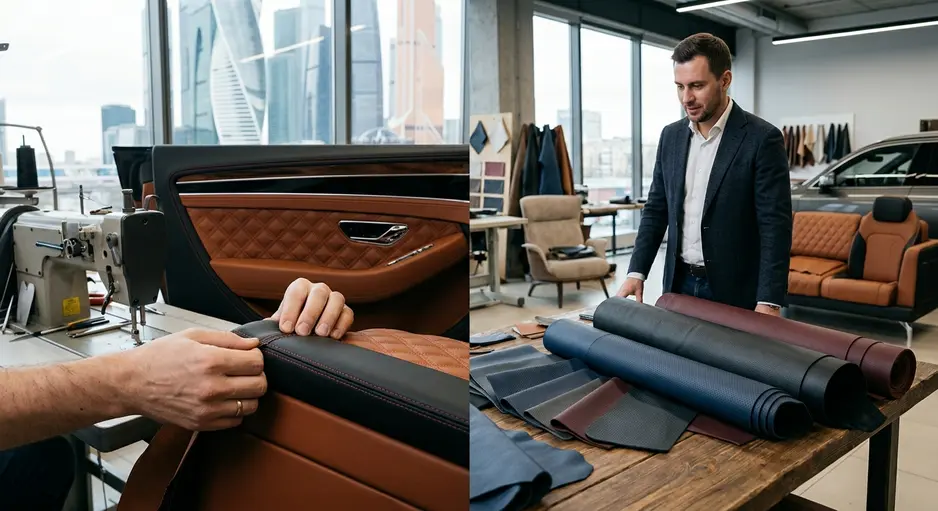
Documents may include a commercial invoice, packing list, bill of lading or air waybill, product specification, test reports, and insurance documents where required. A certificate of origin or conformity document may also be requested.
The exact requirements depend on product construction, HS classification, intended use, contract terms, and current import rules. The buyer and customs representative should confirm the documents before dispatch.
Does synthetic leather require EAC certification?
The answer can differ for raw material and finished goods. TR CU 017/2011 may be relevant to certain light-industry products, while automotive products can fall under sector-specific requirements. The Russian importer or an authorized EAEU conformity specialist should confirm classification and obligations before shipment.
Practical steps for a lower-risk first order
- Confirm the HS classification and intended application.
- Approve written specifications and physical samples.
- Check current banking and payment feasibility.
- Review applicable trade restrictions and freight routes.
- Agree on packing, labels, documents, and Incoterms.
- Arrange pre-shipment inspection when needed.
- Begin with a trial order before increasing volume.
Synthetic Leather Exporter & Supplier in Russia
Choose Performance Before Appearance
Select synthetic leather by its end use, construction, measurable performance, and consistency. Compare physical samples, written specifications, test data, customization terms, and export support before ordering.
Looking for a premium synthetic leather exporter from India? Contact Rock Uniquoters with your required application, colour, texture, thickness, order volume, and Russian destination. Request current product details, a sample, technical specifications, and a customized export quotation before placing a bulk order.
Frequently Asked Questions
1. What is the best synthetic leather for furniture?
The best choice depends on traffic level, cleaning methods, desired feel, and required abrasion, tear, seam, and colour-fastness performance. Contract seating usually needs tougher specifications than decorative residential furniture. Always test the selected upholstery material under realistic conditions.
2. Is PVC synthetic leather suitable for automotive interiors?
It may suit certain interior parts when its construction passes the buyer’s required abrasion, flex, temperature, odour, flammability, and cleaning tests. Suitability should be confirmed for the specific component. Appearance or thickness alone cannot prove automotive performance.
3. Can artificial leather be customized by colour and texture?
Customization may include colours, embossed grains, smooth surfaces, backing fabrics, thicknesses, and matte or glossy finishes. Available options and minimum quantities depend on the supplier’s process. Buyers should approve signed physical samples before bulk production begins.
4. How do I request synthetic leather samples for Russia?
Send the intended application, thickness, width, backing, colour, texture, expected volume, test requirements, and delivery location. Request both an appearance sample and a technical data sheet. State whether the sample is for design review, testing, or a production trial.
5. What causes synthetic leather to crack or peel?
Common causes include weak coating adhesion, unsuitable formulation, repeated flexing, low-temperature exposure, high heat, harsh cleaning chemicals, and poor application matching. Hydrolysis can affect susceptible PU constructions. Correct specifications and realistic testing help reduce these risks.