02 November, 2026
Soft leather often feels more luxurious, while firmer leather can provide better structure and easier upkeep. Yet neither option is always better. The right upholstery leather texture depends on the furniture design, daily use, cleaning needs, and desired look.
Softness alone does not determine leather quality or service life. Finish, thickness, grain, backing, seams, and construction also matter. This practical guide compares soft vs hard texture leather for homeowners, designers, upholsterers, and furniture manufacturers.
Is Soft or Hard Leather Better for Upholstery?
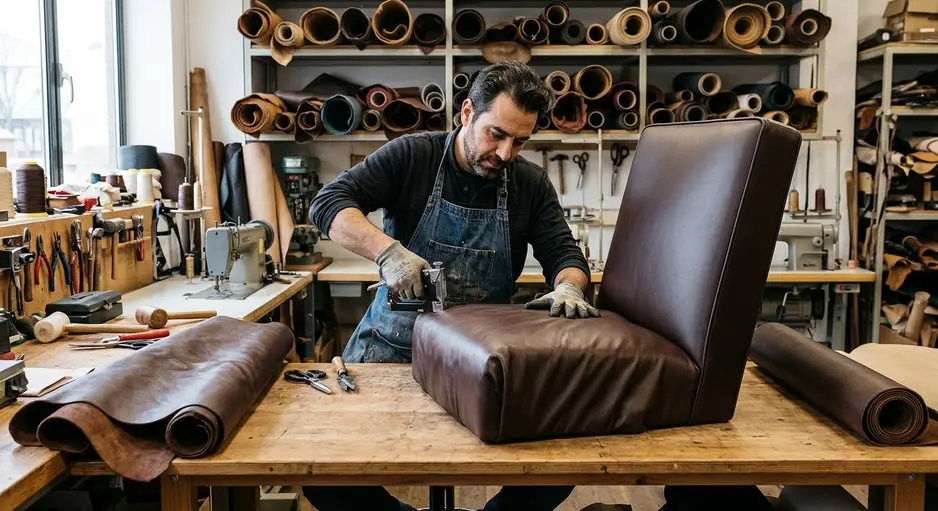
Choose soft leather when comfort, flexibility, and a relaxed premium feel are most important. Choose firm leather when the furniture needs clean lines, body support, and shape retention. For stains and routine cleaning, a protected finish is often more important than softness.
The best option also depends on hide quality, finish type, thickness, cushion design, and maintenance. A soft protected leather may perform better than an unprotected firm leather in a busy home. Always assess the full material specification rather than touch alone.
Quick Recommendation by Furniture Type
Deep residential sofa: Soft to medium leather for comfort and easy conformability.
Formal sofa: Medium-firm leather for balanced comfort and shape.
Dining chair: Firm leather for structure and easier cleaning.
Office seating: Medium-firm leather for support and daily wear.
Hotel or restaurant seating: Firm, protected leather for demanding use.
Premium accent chair: Soft, lightly finished leather for a natural touch.
What Do Soft and Hard Texture Leather Mean?
“Soft” and “hard” are not formal leather grades. They describe the material’s hand, temper, flexibility, and tactile feel. Leather quality must also be judged by its finish, grain structure, thickness, backing, and physical test results.
Soft Texture Leather and Flexibility
Soft texture leather has a supple hand and bends easily. It wraps around curves and conforms well to deep cushions. This flexibility can create folds, wrinkles, and a relaxed appearance.
Soft leather may be aniline, semi-aniline, corrected-grain, or protected. Its feel does not identify its finish. A soft leather material for premium furniture should therefore be selected for both its drape and intended use.
Hard Texture Leather and Shape Retention
Hard texture leather has a firmer hand and greater resistance to bending. It can help tailored furniture maintain straight edges and clean panels. It may also show fewer body impressions when matched with suitable foam and construction.
However, firm leather is not automatically more durable. It can feel rigid if the upholstery pattern, cushioning, and furniture geometry are poorly matched. Technical testing is needed before calling any material suitable for heavy-duty use.
Surface Grain Structure vs Overall Firmness
Natural grain shows the hide’s original surface. Corrected grain is lightly altered to improve consistency, while embossed grain uses a pressed pattern. Smooth finishes have less visible texture.
Any of these leather texture types can feel soft or firm. A deep grain may disguise small marks, but a pronounced pattern does not guarantee better abrasion resistance.
Soft vs Hard Leather: Key Performance Differences
Tactile comfort: Soft leather feels plush and inviting. Firm leather feels structured and supportive.
Flexibility: Soft leather conforms easily. Firm leather offers moderate or limited conformability.
Shape retention: Soft leather creates a relaxed profile. Firm leather usually holds cleaner lines.
Crease formation: Supple surfaces may show folds sooner. Firm surfaces tend to resist body impressions.
Scratch visibility: Results depend mainly on the finish. Protected surfaces often hide or resist minor marks better.
Cleaning: Pigmented or protected leather is usually easier to maintain, whether it feels soft or firm.
Breathability: Light finishes may feel more natural. Heavy coatings can reduce moisture exchange.
Best uses: Soft leather suits sofas and lounge seating. Firm leather suits dining, office, and commercial furniture.
Tactile Comfort, Cushioning, and Body Support
Leather softness is not the same as seat softness. Foam density, suspension, frame design, and backing material determine much of the actual seating feel. A firm leather cover can still feel comfortable over well-designed cushioning.
Likewise, very soft leather cannot correct a poor cushion or weak frame. When evaluating soft or hard leather for upholstery, test the complete seating system whenever possible.
Resistance to Scratches and Scuff Marks
Firm leather is not always more scratch-resistant. Coating thickness and surface finish are often the deciding factors. Aniline leather can develop an attractive patina, but it may show scratches, spills, and color changes more readily.
Protected pigmented leather is generally easier to clean and may offer greater resistance to scratches and scuff marks. This can make it practical for families, dining spaces, and public interiors.
Breathability and Surface Temperature
Lightly finished leather may exchange heat and moisture more naturally. Thick coatings can feel warmer or less natural against the skin. Room temperature, sunlight, clothing, and ventilation also affect how the surface feels.
Which Texture Is More Durable Under Daily Use?
Neither texture is automatically more durable. Wear performance depends on the hide, finish, fiber structure, thickness, construction, cleaning routine, and type of use. Visual inspection alone cannot confirm long-term performance.
Abrasion Resistance in High-Traffic Areas
Homes, offices, restaurants, hotels, and waiting rooms place different demands on leather upholstery material. For high-traffic areas, request documented results for abrasion, rubbing, and flex resistance.
Relevant methods include ISO 17076 for abrasion resistance, ISO 11640 for colorfastness to rubbing, and ISO 5402 for flex resistance. These standards describe test methods; they do not create one universal pass level for every furniture application.
Tensile Strength and Tear Resistance
Hide thickness, fiber structure, cutting direction, and leather quality affect tensile strength and tear resistance. ISO 3376 covers tensile strength and elongation, while ISO 3377 addresses tear-load testing.
Strong leather can still fail if a pattern places stress near an edge or seam. Test results should therefore be reviewed alongside the furniture design and expected load.
Upholstery Stitching and Seam Durability
Needle size, stitch density, thread, seam allowance, and reinforcement all affect service life. Too many needle holes can weaken leather along a seam. Commercial producers should test complete upholstery assemblies rather than approving leather from a swatch alone.
Best Leather Texture for Residential and Commercial Interiors
Soft Leather for Sofas and Premium Furniture
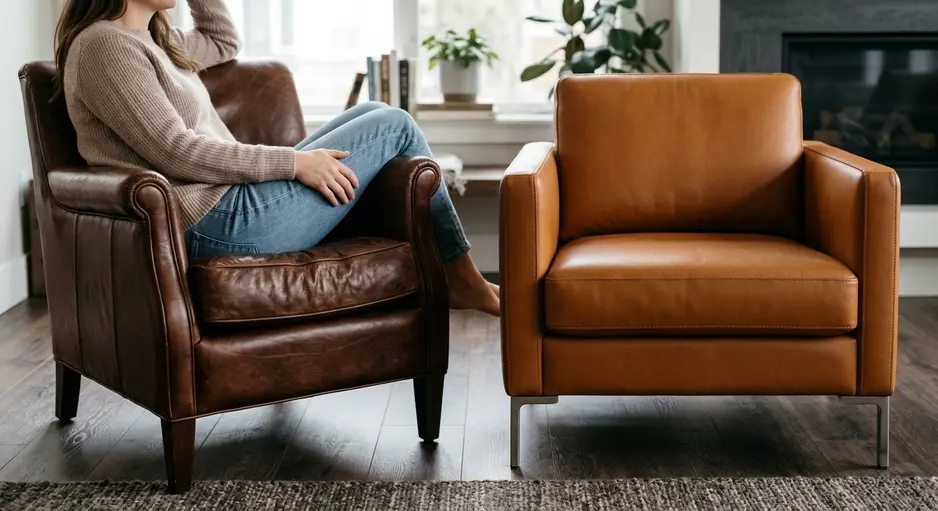
Soft leather for furniture works well on lounge sofas, recliners, reading chairs, and deep cushions. It offers tactile comfort and a welcoming appearance. Natural wrinkles and patina may become part of the design over time.
For homes with children or pets, medium-soft protected or semi-aniline leather can provide a useful balance of comfort and care. Buyers should still review cleaning instructions and scratch behavior before ordering.
Firm Leather for Dining and Office Seating
Firm leather supports tailored silhouettes and thinner upholstery profiles. It is often suited to dining chairs and upright office seating where cushioning and body support must remain consistent.
A protected surface can also simplify cleaning and stain removal. This is especially useful where food, drinks, denim transfer, or frequent contact is expected.
Soft vs Hard Leather for Commercial Seating
Restaurants, hotels, reception areas, and coworking spaces need more than an attractive swatch. A practical soft vs hard leather for commercial seating review should consider abrasion, scuffing, batch consistency, cleaning chemical compatibility, and expected service life.
Large projects should include prototype or field trials. This helps teams assess comfort, crease formation, seam performance, and maintenance under realistic conditions.
Real-World Selection Examples
- Luxury residential sofa: Medium-soft semi-aniline leather for comfort with moderate protection.
- Busy restaurant booth: Firm, protected pigmented leather for shape retention and routine cleaning.
- Executive chair: Medium-firm leather balancing flexibility, support, and a premium finish.
- Hotel lobby: Performance-tested protected leather with clear maintenance instructions.
How to Choose Leather Texture for Upholstery
1. Define the Furniture’s Use Level
Decide whether the furniture will see occasional, daily, or high-traffic use. Account for children, pets, food, direct sunlight, denim transfer, and maintenance frequency. These factors may rule out delicate finishes even when their touch is appealing.
2. Evaluate a Physical Sample
- Bend and compress the sample to check flexibility.
- Observe how it recovers after folding.
- Rub it gently with a clean white cloth.
- Inspect grain and color consistency in natural light.
- Compare its touch at normal room temperature.
- Test approved cleaners in an inconspicuous area.
These checks help compare samples, but they do not replace laboratory tests or a production trial.
3. Review the Technical Specification
Request details about leather types, finish, thickness, usable cutting area, surface grain structure, and backing construction. Ask for relevant abrasion, flex, tear, and colorfastness results.
Furniture manufacturers should also review batch consistency, minimum order quantity, lead time, care instructions, warranty limits, sourcing records, and restricted-substance compliance. Responsible sourcing information may also refer to recognized programs such as the Leather Working Group.
4. Match the Leather to the Design
Soft leather suits deep cushions, tufting, and curved forms. Medium-firm leather works across many sofa designs. Firm leather is often better for tailored panels and structured seating. Prototype the design before approving a large order.
5. Assess the Supplier, Not Just the Swatch
A reliable textured leather supplier for furniture manufacturers should provide representative samples, clear technical documents, consistent production, and realistic lead times. Buyers can contact Rock Uniquoters to discuss texture, finish, thickness, performance needs, and sample availability for an upholstery project.
How Do Cleaning and Maintenance Affect Service Life?
Cleaning and Stain Removal Requirements
Use pH-appropriate products approved for the leather’s finish. Blot spills promptly rather than rubbing them into the grain. Avoid household detergents, solvents, oils, and silicone products unless the supplier has approved them.
Always test a cleaner in a hidden area first. Deep embossed patterns may require more careful dust removal, even when the protected surface is easy to wipe.
Maintenance Frequency and Expected Service Life
Vacuum seams and remove surface dust regularly. Keep furniture away from excessive heat and prolonged direct sunlight. Follow the supplier’s conditioning guidance, since not every finished leather requires frequent conditioning.
Preventive care often improves service life more than selecting the hardest available texture.
Buy Best Soft & Hard Texture Leather
Choose Texture Based on the Complete Application
The soft vs hard texture leather decision should balance comfort, shape retention, surface protection, test performance, and maintenance. Do not choose by softness or firmness alone. Request physical samples, technical specifications, and production trials before placing a large order.
Contact Rock Uniquoters to discuss leather texture, finish, thickness, performance requirements, and sample availability for residential or commercial upholstery projects.
Frequently Asked Questions
1. Does soft leather wear out faster than hard leather?
Not necessarily. Wear depends on finish protection, leather quality, thickness, construction, cleaning, and usage. Some soft protected leathers handle daily use well, while lightly finished options may show scratches and stains sooner.
2. Is hard texture leather always more durable?
No. Firmness can improve shape retention, but it does not guarantee abrasion resistance, tear strength, or stain protection. Technical test results provide a more reliable durability assessment.
3. What is the best leather texture for sofa upholstery?
Medium-soft leather is often a versatile choice because it combines comfort, flexibility, and reasonable shape retention. Homes with pets, children, or frequent guests may benefit from a protected finish.
4. Which leather is best for high-use commercial furniture?
Look for protected upholstery leather with documented abrasion, rubbing, flex, tear, and cleanability performance. A medium-firm or firm hand often suits structured commercial seating.
5. Is textured leather upholstery easier to maintain?
Embossed texture may disguise minor marks, but cleanability depends mainly on the finish. Deep grain patterns can collect dust and may require more detailed cleaning.