07 October, 2026
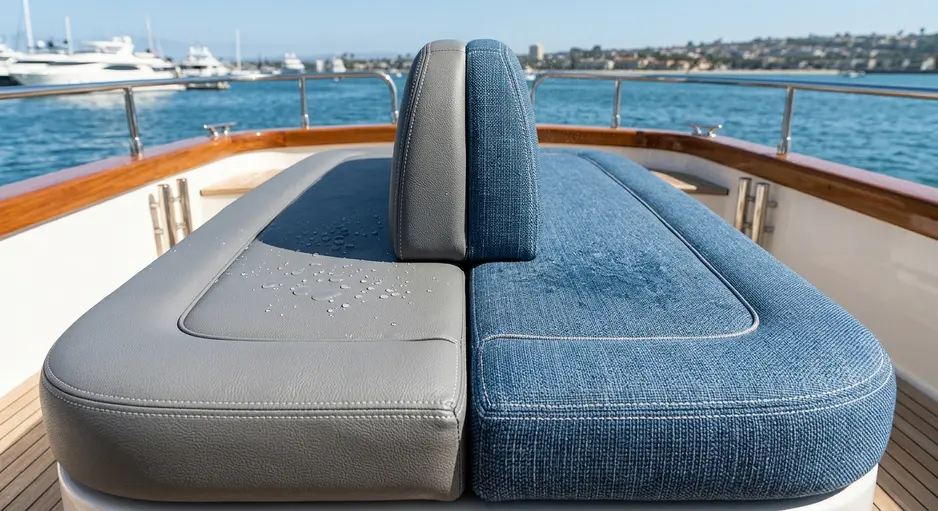
Choosing boat upholstery is about more than colour or appearance. Seats and cushions must handle sunlight, saltwater, humidity, wet clothing, spills, and frequent cleaning. When comparing synthetic leather vs fabric for marine upholstery, the best choice depends on where and how the material will be used.
Marine-grade synthetic leather often works well for exposed seating because it has a water-resistant, wipe-clean surface. Marine fabric is usually softer and more breathable, making it a strong option for cabins and covered lounges. However, product specifications, construction, and maintenance matter more than the material name alone.
What Counts as Synthetic Leather or Marine Fabric?
Both terms cover several types of marine upholstery materials. Two products that look alike may perform very differently in sunlight, moisture, or heavy use. Buyers should always review the coating, backing, test results, and intended application.
PVC Synthetic Leather and Marine Vinyl
PVC synthetic leather has a textile backing covered by flexible PVC layers. This coated fabric construction creates an embossed, leather-like surface that is easy to wipe clean. It also offers good stain and water resistance when properly formulated.
These qualities make marine vinyl upholstery a common choice for cockpit benches, helm seats, and other boat seating applications. Yet not every vinyl is suitable for a vessel. Genuine marine-grade material should have documented UV stability, abrasion resistance, mildew resistance, and cold-crack performance.
PU Synthetic Leather
PU synthetic leather can feel softer and more like natural leather. It may suit premium yacht interior applications, but ordinary PU can break down through hydrolysis. This happens when heat and humidity weaken the coating, leading to peeling, tackiness, or delamination.
PU should only be selected when the technical data confirms that it was engineered and tested for outdoor marine environments. Appearance alone is not proof of durability.
Common Marine Upholstery Fabrics
Marine fabric upholstery may include solution-dyed acrylic, marine-grade polyester, laminated textiles, and woven indoor-outdoor fabrics. These options often feel cooler and allow more airflow than a coated surface.
A woven fabric may be water-repellent without being waterproof. Performance depends on its fibre, weave, backing, and finish. Solution-dyed products are often valued because the colour is added during fibre production rather than applied only to the surface.
Synthetic Leather vs Marine Fabric at a Glance
Surface water resistance
Synthetic leather: Usually excellent.
Marine fabric: Varies with the weave, coating, and backing.
Saltwater cleanup
Synthetic leather: Generally easy to rinse and wipe.
Marine fabric: May need washing followed by complete drying.
UV stability
Synthetic leather: Good when properly formulated.
Marine fabric: Often excellent in quality solution-dyed materials.
Comfort
Synthetic leather: Can become warm in direct sun.
Marine fabric: Usually softer, cooler, and more breathable.
Maintenance
Synthetic leather: Needs regular wiping and approved care products.
Marine fabric: Needs vacuuming, suitable washing, and thorough drying.
Typical applications
Synthetic leather: Exposed seats and spill-prone areas.
Marine fabric: Cabins, removable cushions, and covered lounges.
Which Material Wins Overall?
Choose marine-grade synthetic leather when easy cleaning and surface water resistance are the main goals. Choose fabric when soft-touch comfort and breathability matter more. Many yachts benefit from using both: coated upholstery outdoors and woven textiles in protected spaces.
Performance in Marine Conditions
Water and Saltwater Resistance
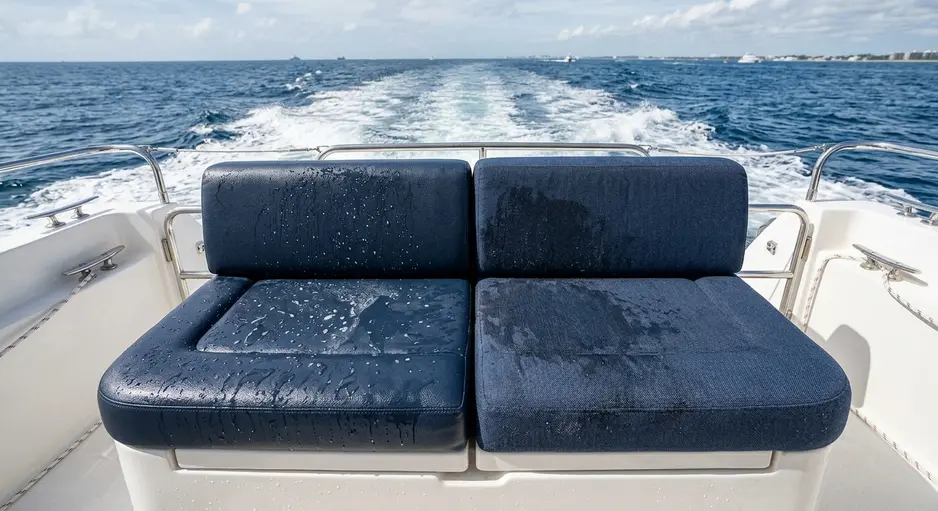
A waterproof face does not make a complete seat waterproof. Water can enter through needle holes, seams, zippers, perforations, or damaged edges. Once moisture reaches the foam and backing, slow drying can create odours and mildew.
Salt deposits can hold moisture and may increase surface wear. Rinse exposed seats with fresh water after saltwater use, then let them dry before fitting a cover. Good drainage and ventilation are as important as the selected boat seat covering materials.
UV Stability and Colour Fastness
Sunlight can fade pigments, weaken coatings, and reduce flexibility. Dark colours may also become much warmer than pale shades. When comparing UV resistant marine upholstery, check the test method, exposure cycle, result, and pass criteria.
Common references include ASTM G154 or ASTM G155 for accelerated weathering and ISO 105-B02 for colour fastness to artificial light. A claim based only on “UV hours” is hard to compare unless both suppliers used the same method and assessment rules.
Mildew and Moisture Management
Mildew resistance does not mean that an installed seat can never develop mildew. Growth often appears on sunscreen, dirt, food residue, stitching, foam, or backing rather than on the upholstery face.
Keep surfaces clean, repair leaking seams, and allow air to move around stored cushions. Breathable covers are usually safer than airtight covers placed over damp seating. Storage compartments also need drainage and ventilation.
Abrasion, Cracking, and Flexibility
Boat seats face wet swimwear, fishing gear, repeated boarding, and constant flexing around seat edges. Abrasion tests such as ASTM D4157 and ISO 12947 can help compare wear performance. ASTM D751 covers several properties of coated fabrics.
Still, a high abrasion figure does not guarantee long service life. UV damage, coating adhesion, seam strength, plasticizer loss, cold cracking, cleaner compatibility, and PU hydrolysis can all cause early failure.
Which Option Is More Comfortable and Attractive?
Heat, Breathability, and Skin Contact
Synthetic leather can feel warm or sticky after long exposure to direct sun. Light colours usually absorb less heat than dark shades. Woven fabric allows more airflow and often feels better against bare skin.
Perforated synthetic leather may improve comfort, but the holes give water a direct path into the seat. It is better suited to protected areas unless the full cushion system is designed to manage moisture.
Design Options for Boats and Yachts
Modern synthetic leather is available in matte finishes, leather grains, and a wide colour range. It can support piping, quilting, embroidery, and two-tone seat designs. Fabric adds softer textures and can create a relaxed, residential feel inside a yacht.
For either option, verify colour fastness and batch consistency before production. Material thickness, backing, foam quality, stitching, and installation have a major effect on the finished appearance.
What Is the Best Material for Each Boat Area?
Open-Deck and Cockpit Seating
Marine-grade PVC synthetic leather is often practical for open decks. Its flexible upholstery surface can wrap shaped foam, while its stain-resistant face handles drinks, sunscreen, and wet swimwear. Seats should still be covered when not in use without trapping moisture underneath.
Fishing and Watersports Boats
These boats need durable marine upholstery materials with strong cleanability and abrasion resistance. Select a texture that provides grip but does not trap dirt. Ask whether the material tolerates fish residue, oils, sunscreen, and the approved cleaning products used on board.
Yacht Interior Applications
Breathable fabric works well for cabins, headboards, salons, and protected cushions. Synthetic leather can be more practical for dining areas, bar stools, and other spill-prone zones. Coordinating both materials creates a consistent design without forcing one product into every application.
Commercial and Charter Vessels
Charter and commercial operators should consider cleaning frequency, repairability, fire performance, and replacement availability. Applicable flammability rules depend on the vessel, flag, jurisdiction, and installation. IMO FTP Code documentation should be requested where those requirements apply.
Hypothetical Yacht Refit Example
A refit team selects PVC synthetic leather for flybridge seats because guests frequently board in wet clothing. A solution-dyed fabric is used in the protected salon for softer comfort. This is an application example, not a customer case study.
How to Choose Durable Marine Upholstery Materials
Ask for Test Data
“Marine-grade” is not one universal performance standard. Before approving synthetic leather for boat seats or a woven alternative, ask the supplier for details covering:
- Base fabric and coating composition
- UV test method and reported result
- Colour-fastness rating
- Abrasion method and cycles
- Fungal or mildew resistance
- Hydrolysis resistance for PU
- Cold-crack and flex performance
- Coating adhesion
- Saltwater and cleaner compatibility
- Required flame-retardancy documents
- Warranty terms and exclusions
Compare Samples Under Real Conditions
- Request production-representative samples.
- Expose them to sunlight, saltwater, sunscreen, and approved cleaners.
- Fold and flex each sample repeatedly.
- Check for fading, transfer, tackiness, hardening, or separation.
- Sew a trial panel to assess stretch and seam appearance.
- Confirm that the foam, thread, adhesive, and backing are marine-suitable.
Evaluate the Supplier
Look for consistent specifications, technical data sheets, batch traceability, sample access, colour-matching support, and clear care instructions. Procurement teams should also confirm minimum order quantities, lead times, packaging, and required regulatory documents.
Buyers comparing synthetic leather for marine upholstery can contact Rock Uniquoters to discuss available constructions, colours, finishes, samples, and technical requirements before approving material for production.
Cleaning and Maintenance
Caring for Synthetic Leather
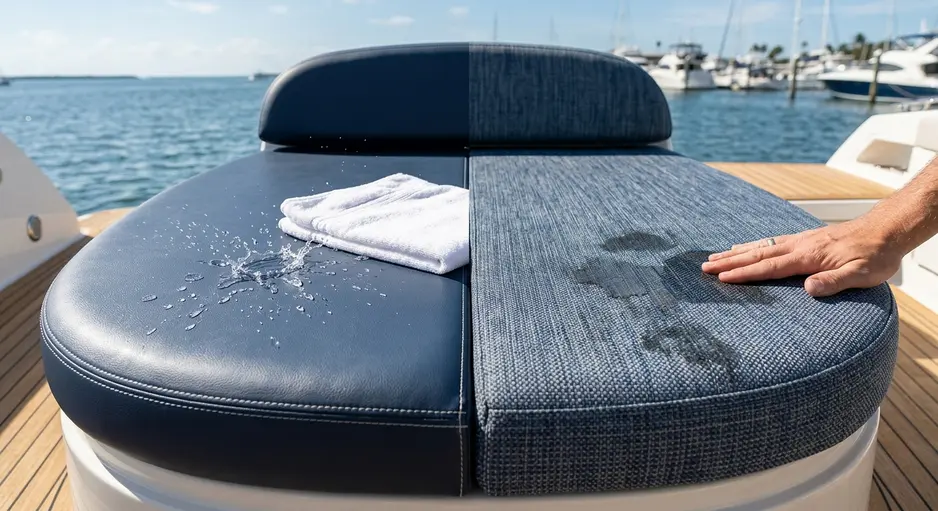
- Rinse salt and loose dirt with fresh water.
- Clean spills promptly with mild soap and a soft cloth.
- Use only cleaners approved by the material supplier.
- Avoid solvents, abrasive brushes, and strong degreasers unless permitted.
- Dry seats before covering them.
- Inspect seams and high-flex edges regularly.
Caring for Marine Fabric
Vacuum dry debris before washing. Blot spills rather than rubbing them into the weave. Use a cleaner suited to the fibre and finish, rinse away residue, and let the fabric, backing, and foam dry fully. Restore water-repellent treatments only when recommended.
Common mistakes include covering wet seats, pressure washing at close range, ignoring broken seams, and storing damp cushions in unventilated compartments.
Explore Synthetic Leather & Fabric
Make the Choice Based on Use and Test Data
In the debate over synthetic leather vs fabric for marine upholstery, neither option wins in every location. Synthetic leather offers easy cleaning and strong surface water resistance for exposed seats. Fabric provides breathable comfort for cabins and protected lounges.
Do not rely on a “marine-grade” label alone. Compare samples, construction details, care instructions, and verified test data. To explore synthetic leather for marine upholstery, contact Rock Uniquoters to discuss suitable constructions, finishes, colours, samples, and project requirements for boat or yacht seating.
Frequently Asked Questions
1. Is synthetic leather good for marine upholstery?
Yes. Marine-grade PVC synthetic leather is suitable for many exposed boat seats when it has documented resistance to UV exposure, abrasion, mildew, flexing, and saltwater. Standard indoor synthetic leather should not be treated as an equivalent product.
2. Is marine vinyl completely waterproof?
The vinyl face may be waterproof or highly water-resistant. However, seams, perforations, zippers, backing, and damaged edges can admit water. The design of the entire cushion determines how well it manages moisture.
3. What lasts longer on boat seats: vinyl or fabric?
Service life depends on material quality, sun exposure, installation, storage, and maintenance. Marine vinyl often performs well on exposed seating. Premium solution-dyed fabrics can provide excellent results in covered areas and removable cushions.
4. Does PU synthetic leather peel in humid conditions?
Ordinary PU may peel or delaminate when moisture causes hydrolysis. Marine-engineered PU can perform better, but buyers should request documented hydrolysis, coating-adhesion, and humidity test results before selection.
5. What is the best upholstery material for a saltwater boat?
UV-stable, saltwater-resistant marine vinyl is often the best material for boat upholstery exposed to spray and spills. Breathable marine upholstery fabric may be more comfortable for protected cabins, covered lounges, and removable cushions.