09 September, 2026
Faux leather has grown from a simple substitute into a flexible choice for modern fashion design. It offers a leather-like appearance with consistent colors, varied surface textures, and many embossing patterns. It can also support lightweight construction and simple care.
Common faux leather uses in fashion and accessories include handbags, shoes, belts, wallets, jackets, and decorative goods. Yet each product places different demands on the material. Selecting a sheet by appearance alone can lead to cracking, peeling, weak seams, or poor flex performance. The best results come from matching the construction to the product’s end use.
What Is Faux Leather, and Why Is It Used in Fashion?
How Faux Leather Is Constructed
Faux leather is usually a coated textile made to look and feel similar to conventional leather. A typical construction includes a fabric backing, a polymer coating, a grain or embossed layer, and a protective top finish.
The terms faux leather, artificial leather, and synthetic leather may refer to several constructions. Two common options are PU leather and PVC leather. Their feel and performance can differ based on the coating formula, backing, thickness, finish, and production method.
Benefits for Fashion Product Design
Brands use faux leather fashion materials because they provide repeatable color, grain, thickness, and finish. Designers can choose matte, glossy, metallic, printed, smooth, or heavily textured surfaces. Custom embossing can also create a distinct look for a collection.
- Broad color variety for seasonal ranges
- Consistent surface texture between production batches
- Efficient cutting for scaled manufacturing
- Lightweight options for garments and large bags
- An easy-care surface for daily-use products
- Animal-free material choices
- Flexible options for printing and decorative finishes
These benefits are not identical across every grade. Material durability depends on the full construction and on how the finished item is made, used, stored, and cleaned.
PU Leather vs. PVC Leather for Fashion Products
PU Leather for Softness and Flexibility
PU leather often has a soft hand feel and good drape. These qualities make many PU constructions suitable for jackets, soft handbags, shoe uppers, and flexible accessories. It can also offer a natural grain and a comfortable weight.
Brands should consider hydrolysis resistance when products may face heat and humidity. Poor resistance can cause the coating to weaken over time. Performance should be checked through supplier data and tests suited to the final use.
PVC Leather for Structure and Easy Care
PVC leather is often considered for structured, easy-clean, and water-resistant products. It is available in many colors and embossed finishes. Certain grades may work well for bags, fashion belts, trims, and products that need a firmer body.
Its results depend on the backing, coating quality, formulation, and additives. PVC leather should not be treated as one standard material with fixed properties.
Which Type Should a Brand Choose?
Neither option is best for every product. Compare flex resistance, abrasion resistance, weight, drape, surface feel, and stain resistance. Brands should also review chemical requirements, expected lifespan, climate, and production methods. Being animal-free does not automatically make either material environmentally sustainable.
What Are the Top Faux Leather Uses in Fashion and Accessories?
The main applications include:
- Handbags, totes, clutches, and backpacks
- Shoes, boots, sandals, and footwear components
- Casual, formal, and decorative belts
- Wallets, cardholders, and small goods
- Jackets, skirts, trousers, and garment trims
- Jewelry, watch straps, tags, cases, and decorations
1. Faux Leather Bags and Handbags
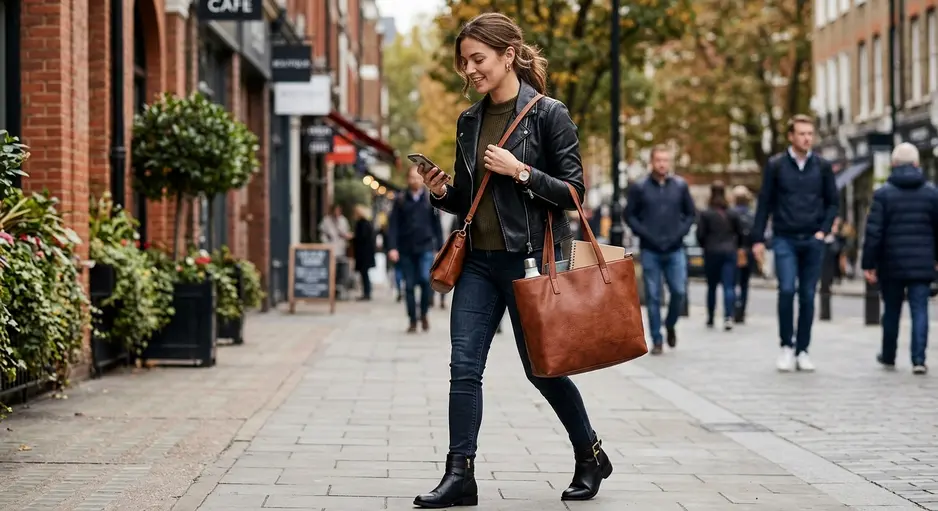
Faux leather bags range from soft totes and hobo bags to structured handbags, clutches, shoulder bags, and backpacks. Designers can choose smooth, pebbled, patent, or saffiano-style finishes. Decorative grains can also give a collection a more distinct identity.
Good faux leather for handbags and purses should be assessed for abrasion resistance, stain resistance, seam strength, colorfastness, and surface cleanability. Shape retention is also important for structured designs.
A firm handbag may need a stable backing and controlled thickness. A slouchy bag requires softer movement and drape. Using one material for both designs may produce poor results, even if the surface looks right.
2. Faux Leather Shoes and Footwear
Faux leather shoes include sneakers, formal shoes, sandals, boots, and fashion footwear. The material may be used for uppers, straps, linings, trims, or decorative overlays.
Faux leather for footwear manufacturing must handle repeated bending, friction, heat, and moisture. Key factors include flex resistance, coating adhesion, abrasion performance, breathability, and resistance to cracking around the toe and other flex points.
Factories should also test compatibility with adhesives, stitching, molding, and other footwear processes. Water resistance may help with light exposure, but it does not mean the completed shoe is waterproof.
3. Faux Leather Belts
Faux leather belts can be casual, formal, wide, narrow, or decorative. The surface can be embossed, stitched, layered, edge-painted, or combined with fabric and reinforcement materials.
Reliable faux leather for belts and wallets needs more than an attractive grain. Belts require tensile strength, dimensional stability, durable buckle holes, and resistance to layer separation. Testing should reflect pulling, bending, fastening, and regular wear.
4. Wallets and Small Goods
Faux leather wallets, cardholders, passport covers, organizers, and key cases benefit from precise cutting and a wide choice of thin gauges. Their small size also allows brands to use bold colors or textures without making a product feel too heavy.
Frequent opening creates stress along folds and edges. Brands should review fold endurance, edge durability, surface cracking, and compatibility with skiving and edge paint. Pocket thickness must also be controlled so the completed wallet closes neatly.
5. Jackets and Garments
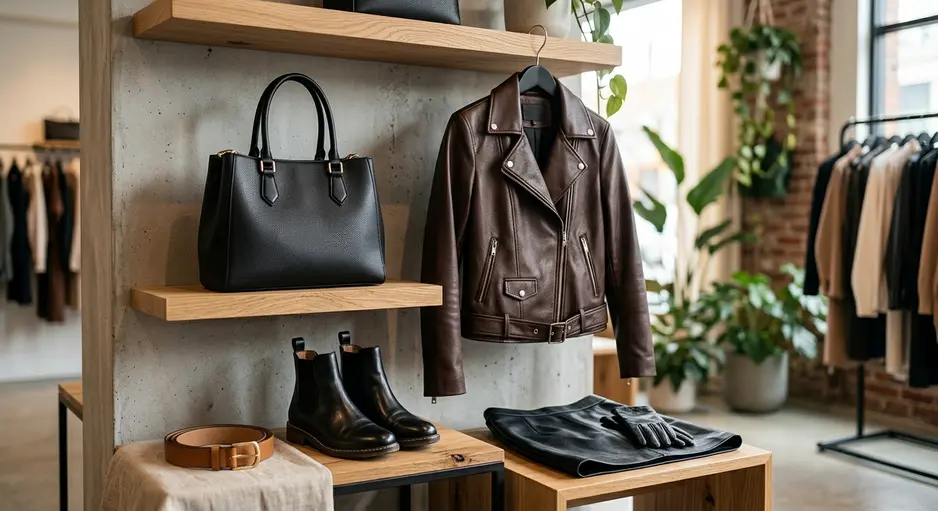
Faux leather jackets remain popular in biker, bomber, fitted, and oversized styles. Synthetic leather fashion also includes skirts, dresses, trousers, corsets, panels, and garment trims.
Garments need softness, low weight, drape, and freedom of movement. Many flexible designs use garment-grade PU leather. Comfort depends on the full product, including the lining, fit, breathability, and climate. A stiff material made for a bag will rarely move well in a jacket.
6. Jewelry and Decorative Accessories
Smaller faux leather accessories include watch straps, bracelets, cuffs, hair pieces, luggage tags, phone cases, hat bands, patches, and trims. These products can benefit from laser cutting, printing, embossing, and low material weight.
Even small parts need suitable tests. A watch strap faces sweat and repeated bending, while a luggage tag may face scratches and outdoor exposure. The application should guide the material choice.
How Faux Leather Expands Fashion Design Options
Color Variety and Custom Finishes
Faux leather fashion products can use neutral, pastel, fluorescent, metallic, two-tone, and printed surfaces. Finishes may be matte, semi-gloss, high-gloss, or patent. This range helps brands build matching bags, shoes, and accessories for one collection.
Surface Texture and Embossing Patterns
Common options include smooth, pebbled, crocodile-style, geometric, and quilted effects. Texture affects more than appearance. A pronounced grain may hide light scratches better than a smooth surface, while a glossy finish may make marks easier to see.
Lightweight and Repeatable Construction
Controlled thickness and repeatable grain can support scaled fashion product manufacturing. Low-weight grades are useful for travel goods, large handbags, garments, and layered accessories where total product weight matters.
Practical tip: Review samples under natural and artificial light. Gloss, color, and grain depth can appear different when lighting changes. Brands should also compare approved samples with bulk material before cutting begins.
How Do You Choose Faux Leather for Each Application?
Handbags
Priority properties: Abrasion resistance, stain resistance, seam strength, and colorfastness.
Construction considerations: Thickness, backing stability, edge finish, and shape retention.
Footwear
Priority properties: Repeated flexing, adhesion, abrasion performance, and water resistance.
Construction considerations: Hydrolysis resistance, breathability, gluing, and resistance to cracking.
Belts
Priority properties: Tensile strength, hole durability, and dimensional stability.
Construction considerations: Reinforcement, layering, edge finishing, and delamination resistance.
Wallets
Priority properties: Fold endurance, low bulk, and edge durability.
Construction considerations: Skiving, stitching, pocket construction, and edge paint compatibility.
Jackets
Priority properties: Drape, softness, movement, and lightweight construction.
Construction considerations: Lining, comfort, flexibility, and response to temperature changes.
Review the Product’s End Use
Consider how often the item will be used and whether it will face rain, sweat, oils, cosmetics, or direct sun. Climate matters too. Heat and humidity can place extra stress on some coatings, while cold conditions may increase the risk of surface cracking.
Test Before Bulk Production
- Abrasion and flex resistance
- Peel strength or coating adhesion
- Tensile and tear strength
- Colorfastness and rub transfer
- Water and stain resistance
- Cold-crack or hydrolysis performance when relevant
Produce a Finished Prototype
A flat swatch cannot show how a material will behave after stitching, folding, gluing, skiving, or edge painting. A finished prototype helps reveal seam puckering, bulky folds, poor adhesion, cracking, and hardware stress before bulk production.
Common Faux Leather Problems and How Brands Prevent Them
Peeling and Delamination
Peeling may result from weak coating adhesion, unsuitable material selection, heat, moisture, or incompatible adhesives. Brands can lower the risk by choosing an application-specific grade and checking peel strength and hydrolysis performance where needed.
Cracking at Folds and Flex Points
Wallet folds, belt holes, and shoe flex zones face repeated stress. The right thickness and backing can help, but physical testing is essential. Prototype testing should copy the way the final product will be used.
Color Transfer, Scratching, and Edge Wear
Dark or saturated colors should be checked for rub fastness. Brands should also test cleaning agents, edge paints, and adhesives on the selected material. A coating with good stain resistance may still scratch if its finish is too delicate for the application.
Care That Supports a Longer Product Life
- Wipe the surface with a soft, damp cloth.
- Avoid harsh solvents and abrasive brushes.
- Let the item dry naturally away from direct heat.
- Store it without tight or sharp folds.
- Follow the supplier’s product-specific care guidance.
What Should Accessory Brands Ask a Supplier?
Brands sourcing faux leather for fashion accessories should request full specifications instead of choosing by price or appearance alone. Useful details include:
- Polymer type and backing composition
- Material thickness, width, and weight
- Surface finish and recommended applications
- Available colors and embossing options
- Relevant physical test results
- Minimum order quantity and lead time
- Batch consistency and quality-control process
- Restricted-substance and traceability documents
- Roll length, packaging, and storage guidance
Product descriptions should also be clear and accurate. For markets covered by imitation-leather labeling rules, brands should confirm that product names and claims meet the relevant requirements.
When evaluating faux leather applications for accessory brands, compare several constructions. Rock Uniquoters can be contacted to ask about available swatches, technical details, color choices, and guidance for a planned application. Final selection should follow testing and prototype approval.
Top Uses of Faux Leather in Fashion and Accessories
Choose Faux Leather by Application, Not Appearance
The leading faux leather uses in fashion and accessories cover bags, footwear, belts, wallets, jackets, and many decorative products. Each one requires a different balance of strength, flexibility, weight, texture, and resistance.
Brands should review technical data, test material samples, and approve finished prototypes before placing bulk orders. For application-specific guidance, contact Rock Uniquoters to ask about suitable options and available swatches for your next fashion product.
Frequently Asked Questions About Faux Leather Fashion
1. Is faux leather durable enough for fashion accessories?
It can be, but durability varies. The coating, backing, thickness, top finish, product construction, and level of use all matter. A material should be tested for the intended accessory rather than judged by touch or appearance alone.
2. Is PU leather or PVC leather better for handbags?
PU leather may suit soft and flexible handbags, while certain PVC constructions can support firmer, easy-clean designs. The better choice depends on shape, weight, finish, expected wear, compliance needs, and required performance.
3. Can faux leather be used for shoes?
Yes. Suitable material must be engineered and tested for footwear. Important checks include repeated flexing, abrasion, coating adhesion, moisture exposure, and compatibility with adhesives and production processes.
4. Is faux leather waterproof?
Some surfaces are water-resistant, but that does not make every finished product waterproof. Stitch holes, seams, edges, zippers, and the backing can allow water to enter. Waterproof claims require testing of the completed item.
5. How long do faux leather bags and jackets last?
There is no fixed lifespan. Longevity depends on material quality, frequency of use, climate, product construction, storage, and care. Regular exposure to heat, moisture, friction, or harsh cleaners may shorten useful life.