
02 March, 2026
Modern interiors are evolving quickly, and upholstery leather continues to play a key role in shaping contemporary spaces. Designers prefer it for its refined appearance, durability, and structured finish. Today, options extend far beyond traditional hides, with high-performance alternatives offering flexibility and sustainability.
From residential living rooms to luxury commercial projects, leather-inspired materials are redefining comfort and design standards. In this guide, we explore the top trends, applications, and smart selection strategies for modern interiors.
What Is Upholstery Leather?
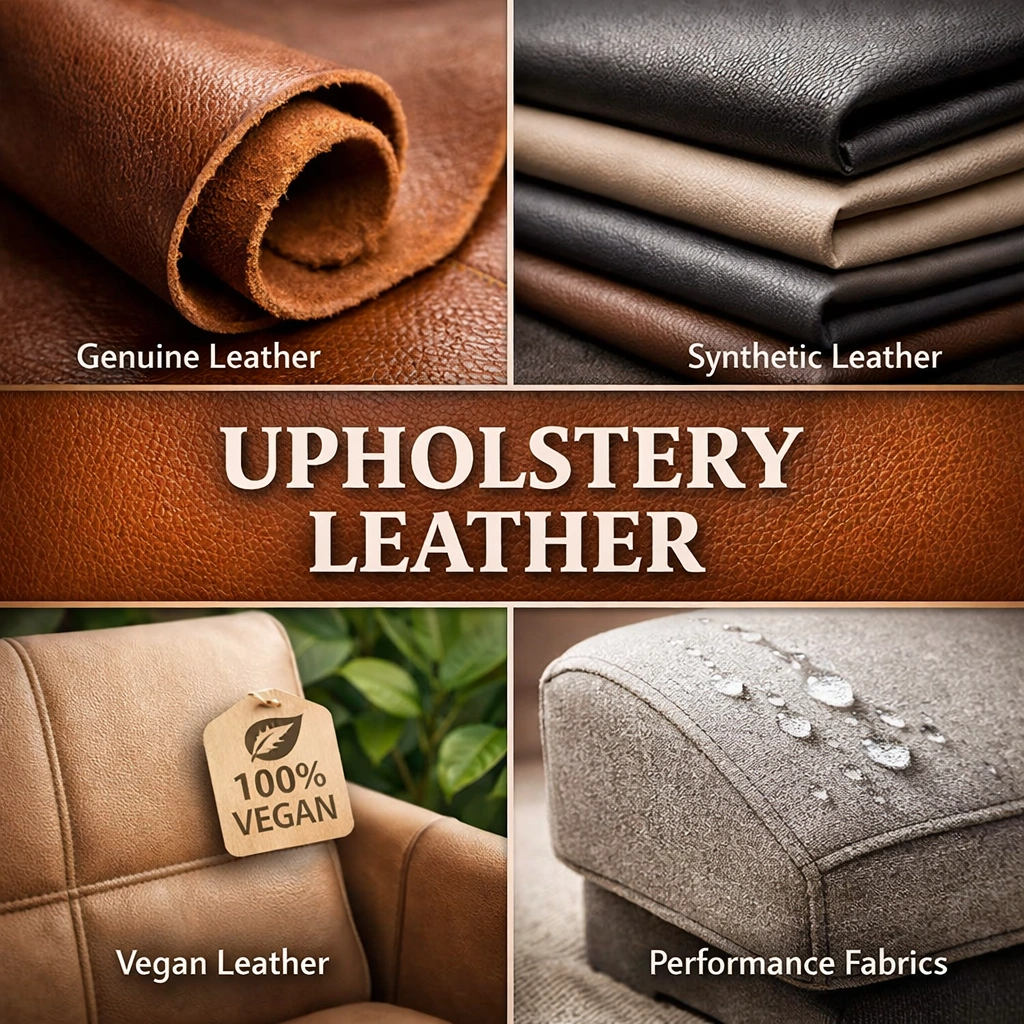
Upholstery leather refers to leather or leather-alternative materials specifically engineered for covering furniture, seating, wall panels, and interior surfaces. Unlike fashion leather, it is designed for durability, flexibility, and long-term use.
Modern upholstery materials include genuine leather, synthetic leather upholstery, vegan leather upholstery, and performance-based alternatives developed for both residential and commercial applications.
Why Leather Upholstery Materials Remain Popular
Leather finishes have long symbolized sophistication. In modern settings, they offer more than just aesthetics. They provide durability, easy maintenance, and long-lasting performance.
Innovations in synthetic leather upholstery and vegan leather upholstery now allow designers to achieve the same premium look with improved practicality. These materials resist stains, scratches, and fading, making them suitable for high-traffic environments.
Automotive interior leather trends have also influenced interior spaces, introducing refined stitching patterns and performance-based finishes.
Top Trends Shaping Modern Interiors
1. Sustainable & Eco-Conscious Materials
Environmental awareness has influenced purchasing decisions. Many homeowners and designers now choose faux leather for upholstery and artificial leather upholstery to reduce environmental impact.
Benefits include:
-
Consistent texture and finish
-
Reduced maintenance
-
Greater color versatility
-
Lower resource dependency
These materials align well with eco-friendly construction goals and modern sustainability standards.
2. Soft Matte & Natural Grain Textures
Glossy surfaces are giving way to subtle, matte finishes. Natural grain patterns inspired by automotive upholstery leather are increasingly preferred.
These textures create depth without overpowering minimalist interiors. They also provide a softer visual experience, making furniture feel warmer and more inviting.
3. Earthy Neutrals & Calm Color Palettes
Neutral tones dominate modern interiors. Shades such as beige, taupe, caramel, and soft grey create relaxed environments.
Design inspiration often comes from car leather upholstery trends, where warm interior tones enhance comfort. These hues blend seamlessly with wood, stone, and metal accents.
4. Statement Accent Seating
While neutrals remain popular, bold seating pieces are becoming focal points. Deep emerald, navy blue, and burgundy are widely used in feature chairs and lounges.
These dramatic tones reflect luxury automotive interior leather styling and help create high-contrast contemporary spaces.
5. Performance-Focused Surfaces
Modern homes demand practical solutions. Advanced upholstery leather products now include:
-
Stain-resistant coatings
-
Scratch protection
-
UV resistance
-
Easy-clean technology
This makes them suitable for hospitality seating, family rooms, and even auto upholstery leather applications where durability is essential.
6. Minimalist Design Integration
Contemporary interiors emphasize clean lines and simple silhouettes. Leather-inspired materials are used in:
-
Modular sofas
-
Sleek headboards
-
Wall cladding panels
-
Executive office chairs
Inspired by automotive upholstery leather craftsmanship, stitching is often refined and precise rather than decorative.
7. Cross-Industry Design Influence
One of the strongest influences on furniture design comes from automotive interior leather technology.
Performance materials originally developed for vehicles are now adapted for residential and commercial spaces. This crossover has raised quality expectations in durability, finish consistency, and tactile comfort.
Synthetic vs Genuine Leather – A Modern Comparison
| Feature | Synthetic / Faux Options | Genuine Leather |
|---|---|---|
| Maintenance | Easy to clean | Requires conditioning |
| Cost | More budget-friendly | Higher |
| Durability | Engineered for performance | Natural aging |
| Color Range | Wide variety | Limited tones |
| Sustainability | Vegan options available | Animal-derived |
Designers increasingly prefer leatherette for upholstery when they need predictable quality and versatile styling options.
Common Applications in Modern Interiors
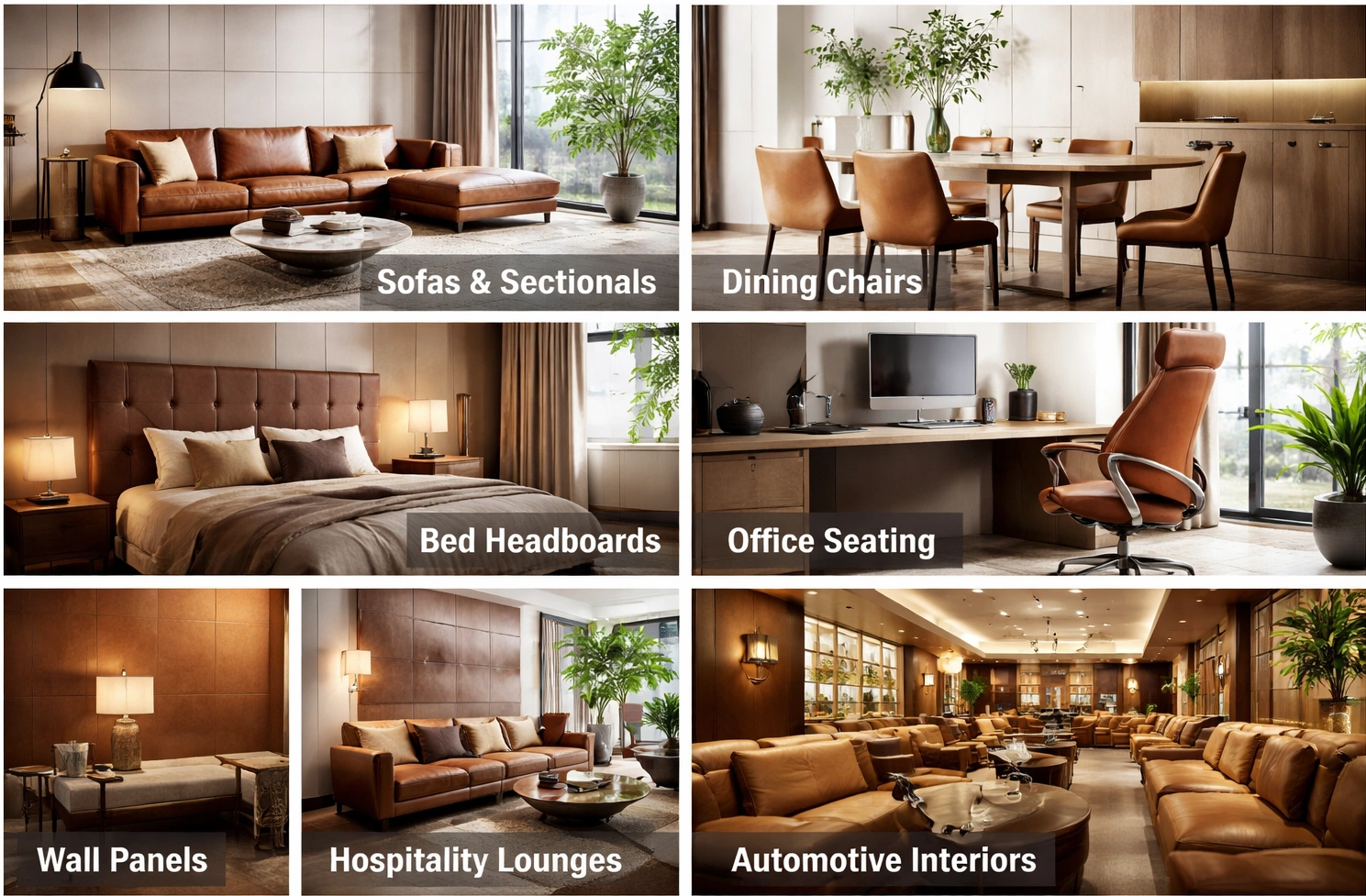
Leather-based upholstery materials are used across multiple settings:
-
Sofas and sectionals
-
Dining chairs
-
Bed headboards
-
Office seating
-
Wall panels
-
Hospitality lounges
-
Automotive interior leather installations
Their ability to combine comfort with resilience makes them ideal for both homes and commercial environments.
Residential vs Commercial Upholstery Applications
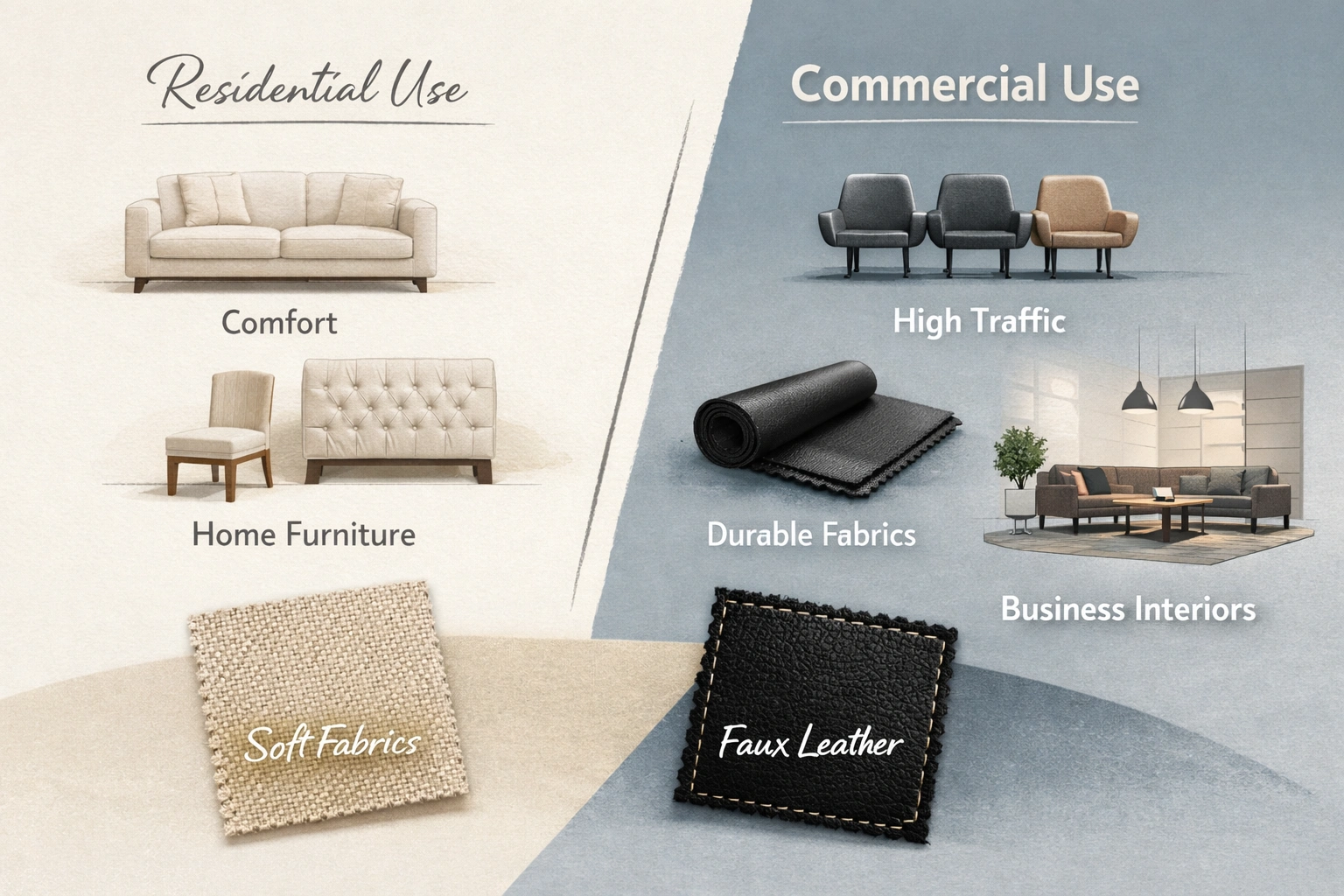
While design preferences may overlap, performance requirements differ significantly.
Residential Use:
-
Focus on comfort and aesthetics
-
Moderate traffic exposure
-
Sofas, dining chairs, headboards
Commercial Use:
-
High-traffic environments
-
Strong abrasion resistance required
-
Hospitality seating, office interiors
For commercial settings, synthetic leather upholstery and automotive upholstery leather-inspired materials are often preferred due to enhanced durability.
How to Select the Right Material
-
Evaluate Usage Level: High-traffic areas require stronger backing and surface protection.
-
Check Thickness & Durability Ratings: Important for long-term performance.
-
Match Color & Texture to Design Theme: Choose finishes that complement flooring and walls.
-
Consider Vegan Alternatives: Vegan leather upholstery supports sustainable design goals.
-
Assess Maintenance Requirements: Easy-clean surfaces are ideal for family or hospitality use.
-
Review Automotive Standards: If used in car leather upholstery projects, durability testing matters.
Rock Uniquoters and Modern Material Innovation
When discussing Top Upholstery Leather Trends in Modern Interior Design, material quality is crucial. Rock Uniquoters is a faux synthetic leather manufacturer supplying premium leather-alternative materials for automotive, upholstery, fashion, and industrial applications.
The company focuses on advanced synthetic leather upholstery solutions that combine durability, aesthetics, and sustainability. With consistent manufacturing standards and performance testing, Rock Uniquoters supports designers seeking reliable materials for both furniture and automotive upholstery leather projects.
The Future of Leather Upholstery in Interiors
The future lies in smarter and more sustainable innovation. Expect developments such as:
-
Enhanced recyclability
-
Improved stain resistance
-
Softer tactile finishes
-
Greater adoption of artificial leather upholstery
As demand grows for sustainable interiors, modern leather alternatives will continue to evolve.
Find Upholstery Leather Exporter
Conclusion
Upholstery leather remains a central element in modern interior design because it balances style and performance. From eco-friendly alternatives to automotive-inspired detailing, current trends focus on durability, comfort, and visual appeal.
By choosing high-quality materials and understanding usage needs, designers and homeowners can create spaces that are both elegant and practical. With ongoing innovation, leather-inspired upholstery will continue shaping interiors in the years ahead.
FAQ Section
1. What are the top trends in upholstery materials for 2026?
Sustainable options, matte finishes, and automotive-inspired textures are leading the market.
2. Is faux leather for upholstery durable enough for daily use?
Yes, modern faux materials are engineered for stain resistance and long-term performance.
3. How long does synthetic leather upholstery last?
With proper care, it can last many years in residential and commercial settings.
4. Can automotive upholstery leather be used in furniture?
Yes, many performance-grade materials used in vehicles are suitable for furniture applications.
5. What is leatherette for upholstery?
Leatherette for upholstery is a synthetic alternative designed to replicate the look and feel of genuine leather.
6. Is vegan leather upholstery environmentally friendly?
Many vegan options are produced using lower-impact processes compared to traditional leather manufacturing.