
03 February, 2026
This material is widely used in cars, furniture, fashion, and commercial interiors because it’s durable, versatile, and cost-effective.However, many users notice that over time, this material feels sticky or tacky, especially in warm or humid conditions.This issue doesn’t just affect comfort it can impact appearance, lifespan, and usability. In this guide, we’ll explain why this surface becomes sticky, how to fix it, and how to prevent it in the future.
What Is Faux Leather and How Is It Made?
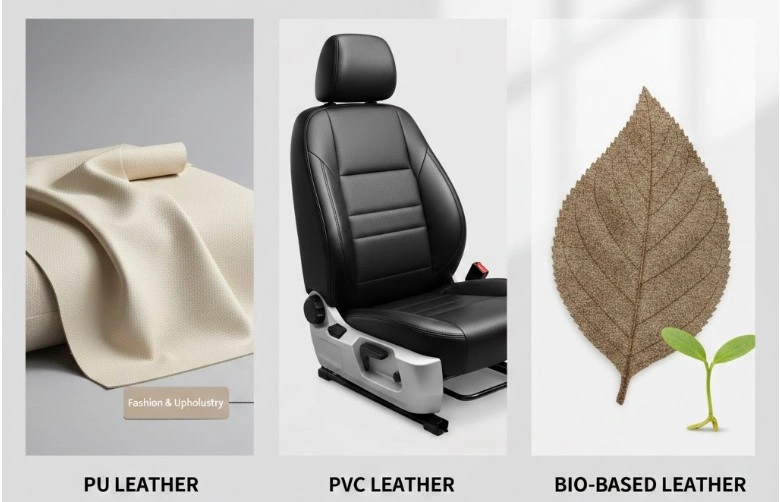
Faux leather, also known as synthetic leather, is a man-made alternative designed to replicate the look and feel of natural leather without using animal hides.
Common Types of Faux Leather
-
PU (Polyurethane) leather: softer, more breathable, commonly used in upholstery and fashion
-
PVC faux Leather: highly durable, water-resistant, ideal for automotive and industrial use
-
Bio-based leather alternatives: newer materials focused on sustainability
Where This Material Is Commonly Used
-
Automotive interiors (seats, dashboards, door panels)
-
Upholstery and furniture
-
Bags, footwear, and accessories
-
Commercial and industrial applications
Why Does This Material Feel Sticky Over Time?
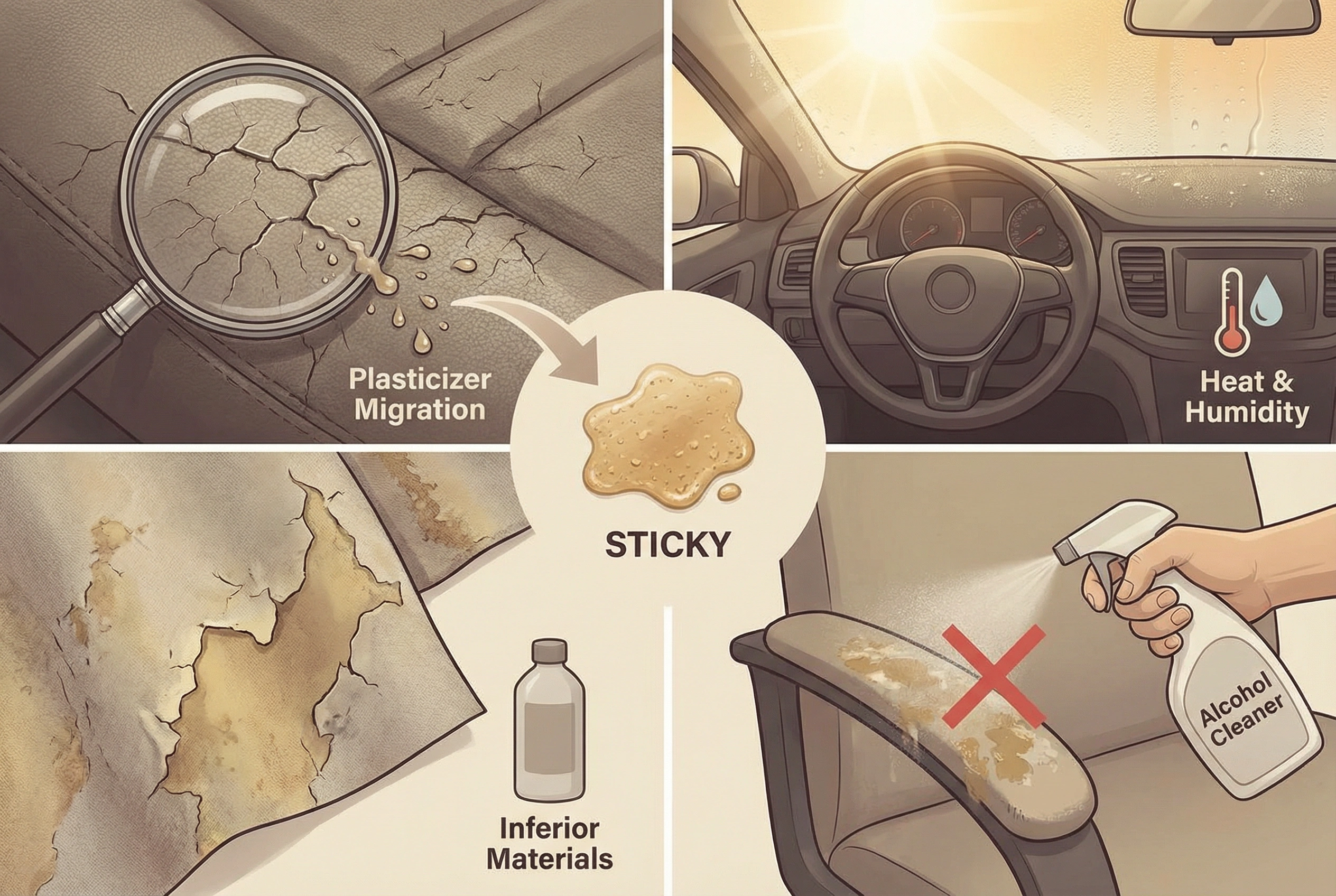
Sticky surfaces are usually a result of material aging and environmental stress, not immediate product failure.
Breakdown of Plasticizers
Plasticizers are additives that keep the coating flexible.Over time, these substances migrate to the surface, creating a sticky or oily feel especially in fake leather made with lower-grade compounds.
Heat and Humidity Exposure
High temperatures and moisture accelerate chemical breakdown.This is why artificial leather often feels tacky in cars, coastal regions, or poorly ventilated spaces.
Low-Quality Raw Materials
Inferior coatings and unstable formulations in leatherette fabric can degrade faster, increasing surface stickiness and discoloration.
Improper Cleaning Products
Using alcohol-based cleaners, silicone sprays, or harsh chemicals strips protective layers, exposing the surface to faster deterioration.
Environmental Factors That Accelerate Stickiness
Several external conditions worsen the problem:
-
High humidity levels
-
Constant heat exposure
-
Direct sunlight
-
Poor airflow
-
Airborne pollutants
These factors are especially damaging to faux leather fabric used in automotive and commercial interiors.
Why Stickiness Feels Worse in Warm Weather
Heat plays a major role in how surface coatings behave.
As temperatures rise:
-
Additives soften and migrate toward the surface
-
Moisture evaporation slows in humid air
-
The outer layer becomes more reactive to touch
This explains why tackiness often appears suddenly during summer or inside parked vehicles.
How Daily Use Contributes to Sticky Surfaces
Beyond heat and humidity, everyday use plays a significant role in how surface coatings break down over time. Frequent contact transfers sweat, body oils, lotions, and cleaning residues onto the material. These substances slowly interact with the protective layer, softening it and increasing surface tackiness.
In high-contact areas such as seating, armrests, and cushions, friction accelerates wear and reduces the effectiveness of the original coating. When combined with warm temperatures, this breakdown happens faster, making the surface feel uncomfortable even if it was previously smooth.
Reducing direct contact buildup, wiping surfaces occasionally with a damp cloth, and allowing proper airflow can slow this process and help maintain the original texture for a longer period.
Manufacturing vs Usage – Where Does the Problem Start?
Understanding the root cause helps determine whether the issue is preventable or unavoidable.
Manufacturing-Related Causes
-
Incomplete curing of surface coatings
-
Incorrect coating thickness
-
Poor-quality additives
-
Lack of material testing
Usage-Related Causes
-
Over-cleaning or wrong maintenance products
-
Improper storage conditions
-
Continuous exposure to heat and moisture
High-quality manufacturers design synthetic leather to withstand these conditions longer.
How to Fix Sticky Surfaces
If your synthetic leather already feels sticky, there are several solutions depending on severity.
Immediate Fixes for Mild Stickiness
-
Clean gently with lukewarm water and a microfiber cloth
-
Use a mild, pH-neutral soap
-
Dry completely with good ventilation
Long-Term Restoration Options
-
Apply a protective water-based coating
-
Use manufacturer-approved conditioners
-
Seek professional refurbishment for upholstery
When Replacement Is the Best Option
If the surface is cracking, peeling, or permanently tacky, replacement may be more cost-effective than repair especially for embossed faux leather with damaged textures.
Quick Fixes Based on the Severity of Stickiness
Not every case requires professional repair. The right fix depends on how advanced the problem is.
Light Tackiness
-
Wipe gently with a damp microfiber cloth
-
Allow complete air drying
-
Improve ventilation around the surface
Moderate Stickiness
-
Clean with a pH-neutral solution
-
Apply a thin water-based protective layer
-
Avoid direct heat exposure for several days
Severe or Permanent Stickiness
When the coating breaks down completely, cleaning no longer helps. In such cases, replacing the affected surface is often more practical than repeated repairs.
How to Prevent Stickiness Over Time
Prevention starts with correct material selection and care.
-
Clean regularly with non-abrasive products
-
Avoid prolonged sun exposure
-
Maintain indoor humidity levels
-
Store unused materials in cool, dry spaces
-
Choose premium-grade faux leather material designed for heat resistance
Faux Leather Quality Comparison
|
Quality Level |
Material Composition |
Stickiness Risk |
Durability |
Ideal Applications |
|
Low-grade |
Basic PVC blends |
High |
Low |
Short-term furniture |
|
Mid-range |
PU-coated fabrics |
Medium |
Moderate |
Fashion, light upholstery |
|
Premium |
Advanced PU/PVC systems |
Low |
High |
Automotive, commercial use |
How to Choose High-Quality Faux Leather for Long-Term Use
Selecting the right material is critical for durability and performance.
Key Features to Look For
-
Heat- and humidity-resistant coatings
-
Stable plasticizer systems
-
Uniform surface finish
-
Proven testing standards
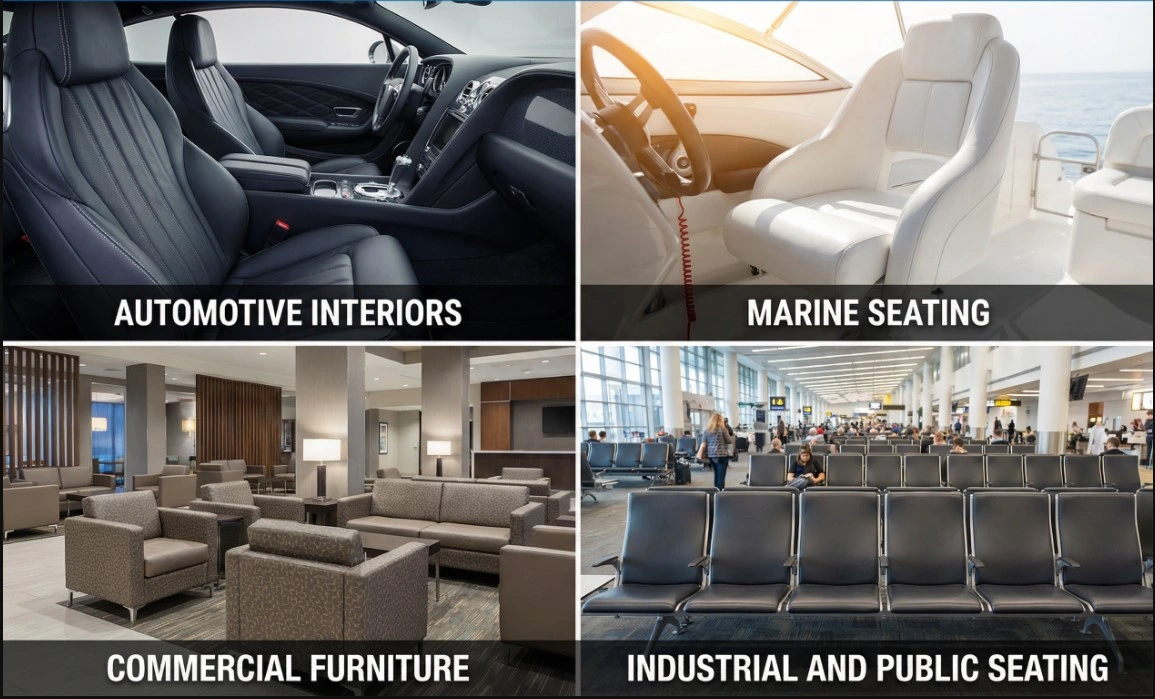
Industries That Require High-Performance Faux Leather
-
Automotive interiors
-
Marine seating
-
Commercial furniture
-
Industrial and public seating
Why Material Quality Matters: Choosing the Right Faux Leather Manufacturer
Not all faux material leather is created equal. Long-term performance, especially resistance to stickiness depends heavily on material formulation, coating technology, and quality control at the manufacturing stage.
How Premium Manufacturers Reduce Stickiness Issues
High-quality manufacturers focus on:
-
Stable plasticizer systems that resist surface migration
-
Advanced PU and PVC coating technologies
-
Controlled curing and embossing processes
-
Heat and humidity resistance testing for real-world conditions
Brand Spotlight: Rock Uniquoters
Rock Uniquoters is a specialized manufacturer of premium faux and synthetic leather materials for automotive, upholstery, fashion, and industrial applications.The brand emphasizes material durability, surface stability, and long-term performance, ensuring that its faux leather maintains a clean, non-sticky finish even in demanding environments.By using advanced formulations and rigorous quality checks, Rock Uniquoters delivers leather-alternative materials suitable for high-heat, high-usage applications.
Conclusion
Sticky surfaces are a common issue caused by heat, humidity, aging additives, and poor maintenance.While mild stickiness can often be fixed, prevention starts with choosing high-quality materials and proper care.Understanding how faux leather and synthetic leather behave over time helps users make better purchasing and maintenance decisions.With the right material selection, these leather alternatives can remain comfortable, durable, and visually appealing for years.
Frequently Asked Questions
1. What causes faux leather to feel tacky?
Plasticizer migration due to heat, humidity, and aging is the main cause.
2. How long does faux leather typically last?
Premium materials can last 7–10 years or more with proper care.
3. Is PU leather better than PVC for heat resistance?
PVC performs better in extreme heat, while PU offers a softer feel.
4. Can humidity permanently damage faux leather?
Yes, prolonged humidity accelerates surface degradation.