
01 January, 2026
Faux leather has become one of the fastest-growing alternatives to traditional hide-based materials, especially for designers, homeowners, and manufacturers who want luxury looks without the high cost or ethical concerns. Among the various textures available today, crocodile faux leather and alligator faux leather clearly stand out. Their bold patterns, rich grains, and premium feel make them highly desirable for décor, fashion, upholstery, and automotive applications.
But if both options look similar, how do you choose the right one? Understanding the differences in texture, performance, and use cases is key to making a smart buying decision especially when comparing crocodile vs alligator leather textures in synthetic form. This blog breaks down everything you need to know before investing in these exotic-looking materials.
What Is Faux Leather?
Faux leather is a man-made material designed to imitate real leather using a base fabric coated with polyurethane (PU) or polyvinyl chloride (PVC). The surface is embossed with natural-looking grain, creating patterns that resemble crocodile, alligator, python, or other exotic hides.
Why Faux Leather Is Popular
-
Cruelty-free alternative to animal leather
-
More affordable and widely available
-
Highly durable and low-maintenance
-
Consistent texture and color
-
Suitable for residential, commercial, and automotive use
LSI Boost: synthetic leather, vegan leather, PU leather, artificial leather.
Whether you choose crocodile faux leather or alligator faux leather, both offer the luxury feel of exotic skins minus the limitations of genuine leather.
Crocodile Faux Leather: Features & Characteristics
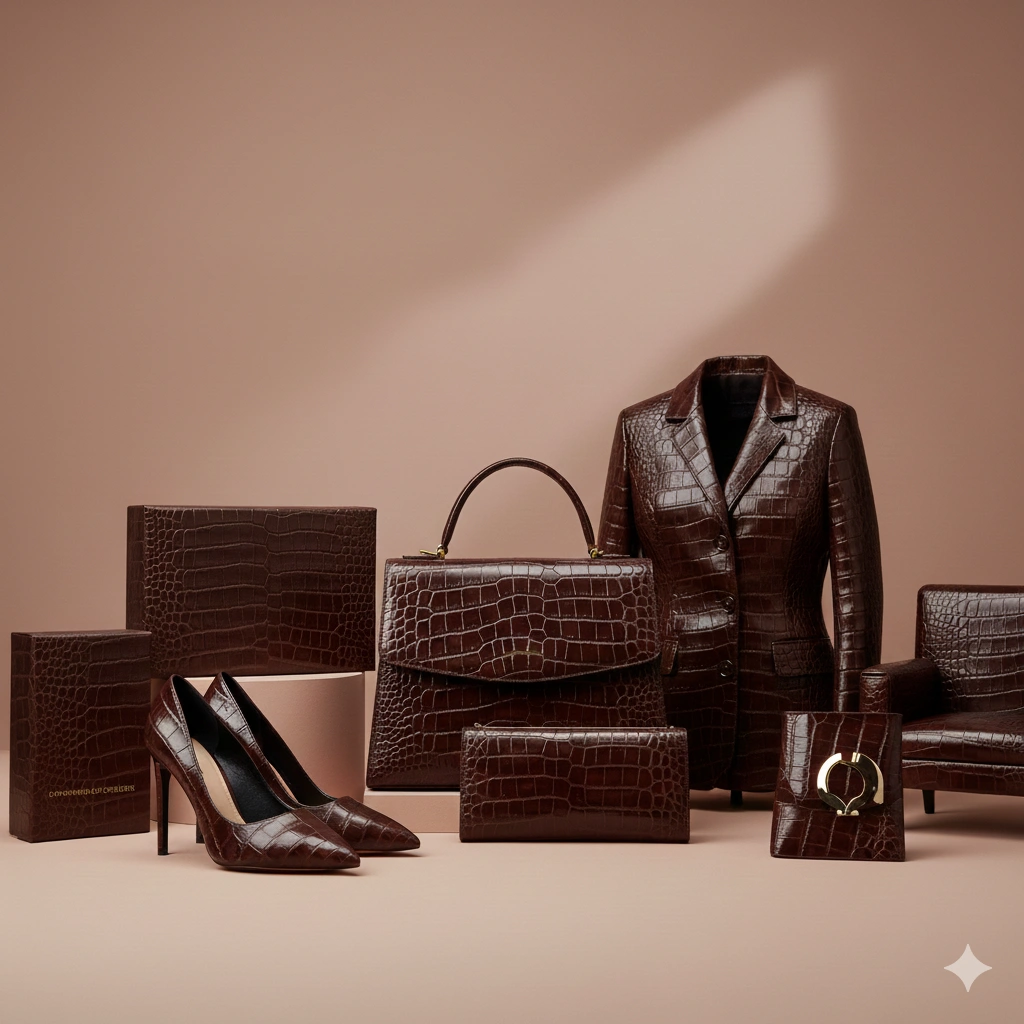
Crocodile patterns are famous for their deep, raised scales, irregular shapes, and naturally wild aesthetic. Croc faux leather replicates this dramatic style using advanced embossing techniques that create a bold and textured finish.
Key Characteristics
-
More irregular, asymmetrical scale patterns
-
Deep valleys and pronounced ridges
-
More visually dramatic and rugged
-
Excellent for statement pieces
Common Uses
-
Premium handbags and clutches
-
High-end jackets and footwear
-
Furniture accents: bar fronts, headboards, sofas
-
Luxury packaging and décor installations
If you're looking for a richer, more aggressive pattern, synthetic crocodile leather is often the preferred choice.
Alligator Faux Leather: Features & Characteristics
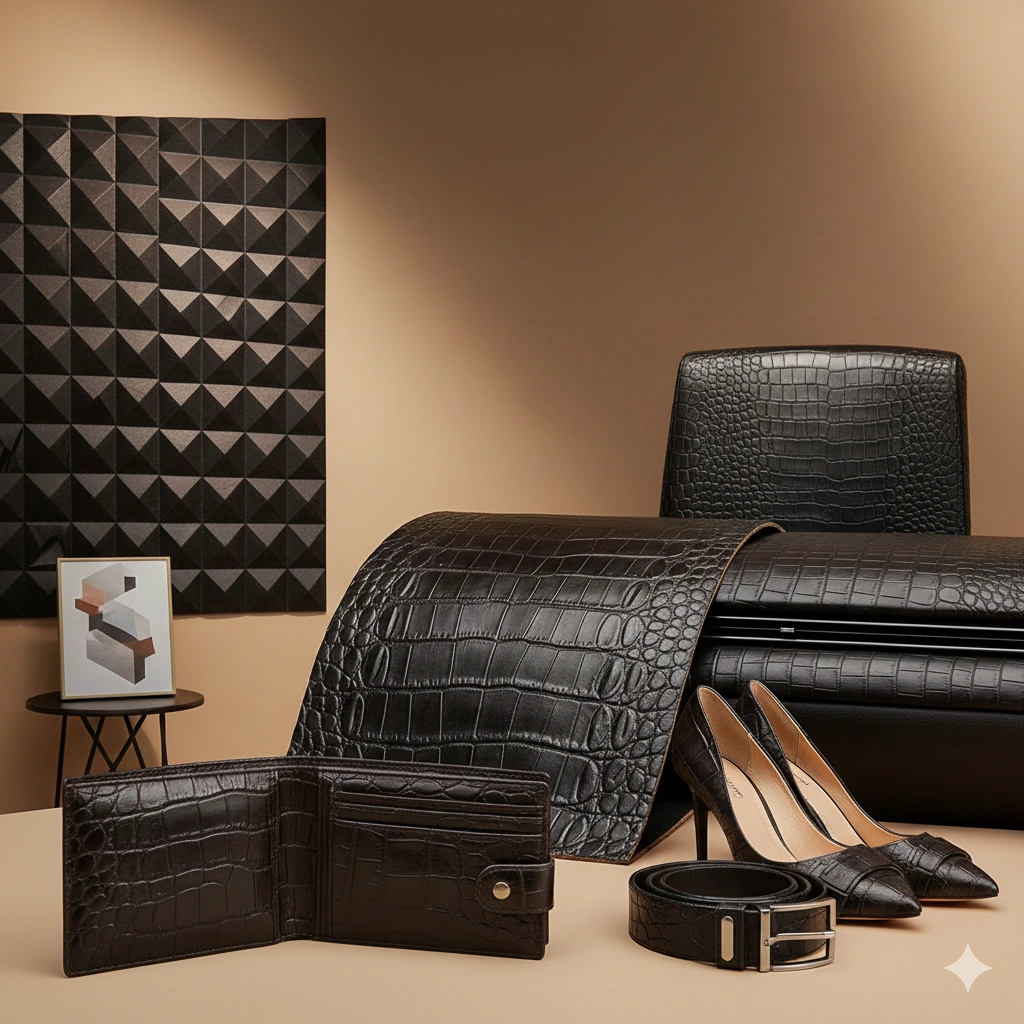
Alligator skins have a more structured, rectangular, and symmetrical scale layout. Alligator faux leather mirrors this tidy grid-like appearance, making it ideal for sleek, modern, and elegant applications.
Key Characteristics
-
Uniform tile-like scales
-
Softer visual appeal compared to crocodile patterns
-
Balanced, refined, and premium look
-
Slightly smoother texture in many varieties
Common Uses
-
Wallets, belts, and high-fashion accessories
-
Automotive interiors
-
Wall cladding and luxury furniture
-
Designer footwear and premium décor
For projects needing an elegant, consistent, and polished visual texture, faux gator leather (alligator imitation) is often the superior choice.
How to Tell the Difference Between Crocodile and Alligator Faux Leather
Although both textures are beautiful, they serve different aesthetics. Here’s how to differentiate them confidently:
Visual Differences
Crocodile faux leather:
-
Irregular scale shapes
-
Different sizes and depths across the surface
-
More dramatic and natural-wild look
Alligator faux leather:
-
Larger rectangular scales
-
More symmetry and uniform spacing
-
Cleaner, more structured appearance
Touch & Flexibility
-
Crocodile patterns may feel rougher due to deeper embossing.
-
Alligator patterns generally feel smoother and more flexible.
Pattern Replication
Manufacturers use heat embossing and pressure molds.
-
Croc molds emphasize uneven depth.
-
Gator molds prioritize uniformity and broad rectangular tiles.
These recognitions help in quick decision-making when choosing between crocodile vs alligator leather textures for your project.
Crocodile vs Alligator Faux Leather: Detailed Comparison Table
| Feature | Crocodile Faux Leather | Alligator Faux Leather |
|---|---|---|
| Texture | Deep, rugged, bold | Smooth, refined, symmetrical |
| Pattern | Irregular scales | Rectangular grid-like scales |
| Durability | Very high | High |
| Flexibility | Slightly firmer | More flexible |
| Visual Appeal | Wild, exotic | Premium, elegant |
| Cost Range | Moderate–High | Moderate–High |
| Best For | Bags, décor, heavy-use areas | Fashion, interiors, automotive |
Which One Is More Durable?
Both crocodile faux leather and alligator faux leather are engineered for high performance, but durability depends on thickness, coating quality, and backing material.
Key Durability Factors
-
PU/PVC coating strength
-
Backing fabric density
-
Abrasion resistance rating
-
UV and moisture resistance
Deeply embossed croc textures may feel slightly more rigid, while gator patterns often offer better flexibility. Both withstand years of use if chosen from a high-quality supplier.
Where Is Crocodile Faux Leather Commonly Used?
Crocodile faux leather is popular in industries that require bold, statement-making designs. Its dramatic depth gives products a premium feel.
Common applications include:
-
Women’s handbags
-
Fashion shoes and boots
-
Luxury jackets
-
Furniture accents
-
Travel bags
-
Decorative wall panels
The strong embossing also stands out on footwear where texture is essential.
Where Is Alligator Faux Leather Preferred?

Alligator faux leather is more polished, making it ideal for sleek and minimalistic designs.
Industries using faux alligator patterns include:
-
Corporate accessories
-
Premium wallets and clutches
-
Office desk organizers
-
Vehicle seat covers
-
Tech products like laptop sleeves
-
Men’s footwear
Here, the smoother texture gives a rich, sophisticated finish that appeals to professional markets.
Why Manufacturers Choose Synthetic Crocodile Leather Over Real Hides
Using synthetic crocodile leather offers several advantages:
1. Consistent Quality
Real hides vary in scale patterns. Faux materials provide uniformity, helping manufacturers maintain consistent product quality.
2. Better Manufacturing Efficiency
Faux leather sheets come in standard sizes, making cutting and production more predictable.
3. Lower Waste
Unlike real hides, synthetic sheets eliminate shape irregularities, which reduces material wastage during cutting.
How to Choose Between Crocodile and Alligator Faux Leather
When selecting between the two for your design or production, consider the following:
1. Texture Preference
Do you want bold or refined?
-
Choose crocodile for depth
-
Choose alligator for sleekness
2. Product Type
-
Bags and decorative items usually prefer crocodile patterns
-
Corporate and minimalist products often choose alligator textures
3. Target Market
Luxury fashion markets may prefer the wild, exotic style of crocodile, while premium business customers may gravitate toward alligator patterns.
4. Thickness and Backing Material
Check the backing fabric (cotton, polyester, microfiber) to ensure it suits your application.
Common Mistakes Buyers Make (and How to Avoid Them)
Many buyers choose based on appearance alone. Avoid these pitfalls:
-
Ignoring thickness and durability ratings
-
Not checking colorfastness (important for outdoor use)
-
Buying low-grade synthetic crocodile leather from unknown sources
-
Choosing the wrong texture for the job (e.g., deep croc for tightly curved surfaces)
-
Forgetting to ask about warranty or quality guarantees
Taking time to evaluate materials ensures the best results.
Why Choose Rock Uniquoters for Premium Faux Leather Materials?
At Rock Uniquoters, we specialize in premium crocodile faux leather and alligator faux leather designed for fashion, interiors, automotive, and commercial applications. Our materials are engineered with high-strength backings, UV-resistant coatings, and rich textures for unmatched visual appeal.
Whether you need croc faux leather, synthetic crocodile leather, or faux gator leather, RockUni delivers high-performance materials trusted by designers, manufacturers, and global brands. With extensive color options, custom embossing patterns, and long-lasting durability, we help you bring luxury-inspired ideas to life.
Conclusion
Choosing between crocodile faux leather and alligator faux leather becomes easy once you understand their texture, pattern, durability, and best-use scenarios. Croc patterns give bold, untamed character, while gator designs deliver structured elegance. Both are excellent alternatives to exotic genuine leather offering style, affordability, and sustainability.
Select the material that aligns with your project’s environment, aesthetics, and performance requirements, and you’ll enjoy long-lasting beauty and functionality.
FAQs – People Also Ask
1. Is crocodile faux leather better than alligator faux leather?
Both have unique strengths. Choose croc for bold, rugged looks and gator for elegant, refined designs.
2. Which faux leather lasts longer?
Durability depends on coating, thickness, and backing. High-grade PU-based faux leather can last many years.
3. Can faux leather look as realistic as natural exotic leather?
Yes. Advanced embossing and printing technology closely replicate natural crocodile and alligator skins.
4. Is faux leather good for furniture?
Absolutely. High-quality faux leather is durable, easy to clean, and ideal for cafés, homes, and commercial spaces.
5. How do I maintain crocodile or alligator faux leather?
Use mild soap, avoid harsh chemicals, and keep away from direct heat for long-lasting beauty.