
06 August, 2026
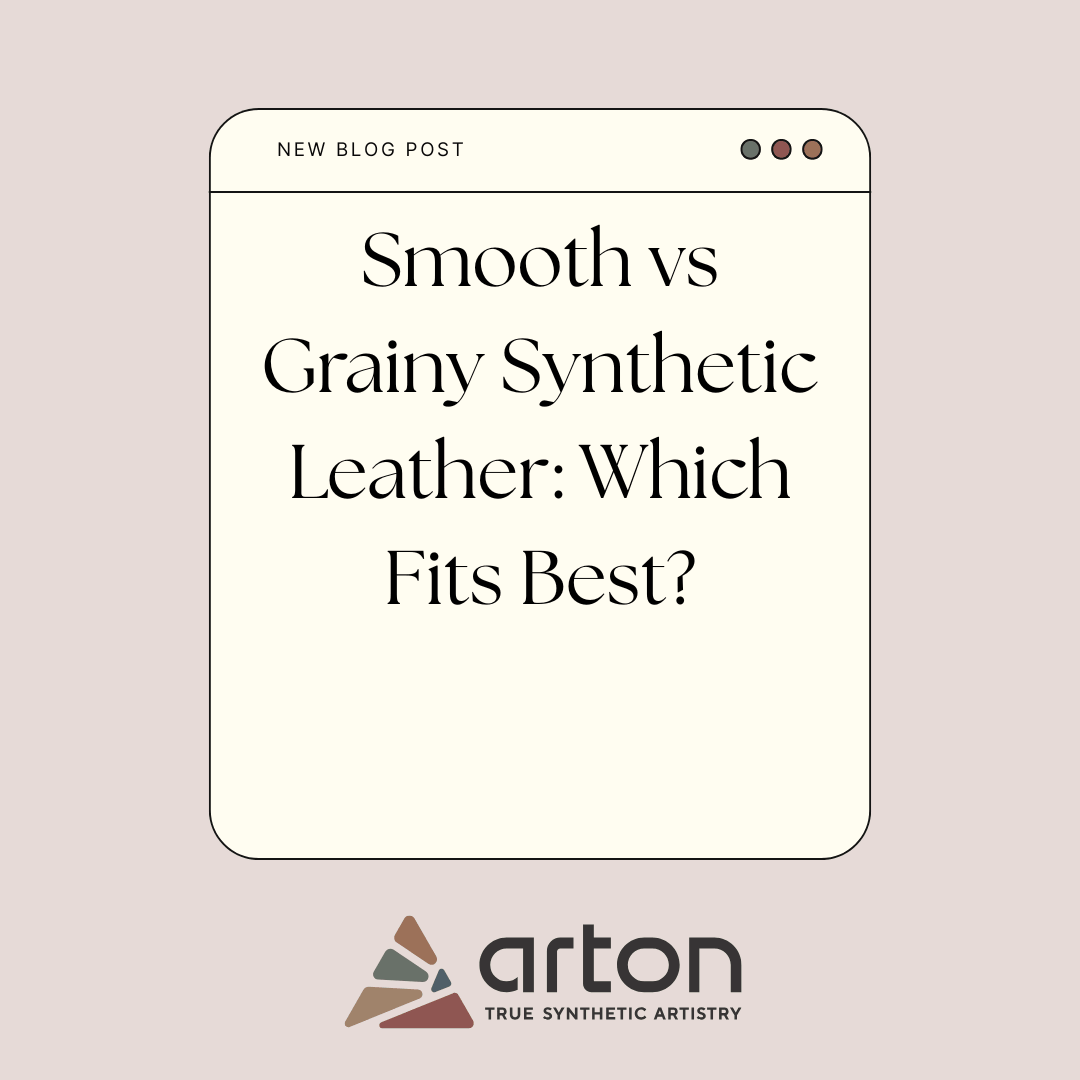
Two synthetic leather samples can share the same color and base material yet create very different results. The reason is often the surface finish. One may look sleek and modern, while the other has a deep grain that feels closer to natural hide.
In a smooth vs grainy synthetic leather comparison, neither finish is always better. Smooth surfaces offer clean lines and simple wiping. Grainy finishes add visual depth and often conceal minor scuffs. The right choice depends on appearance, cleaning needs, wear levels, comfort, and the final application.
What Is the Difference Between Smooth and Grainy Synthetic Leather?
Understanding Synthetic Leather Texture
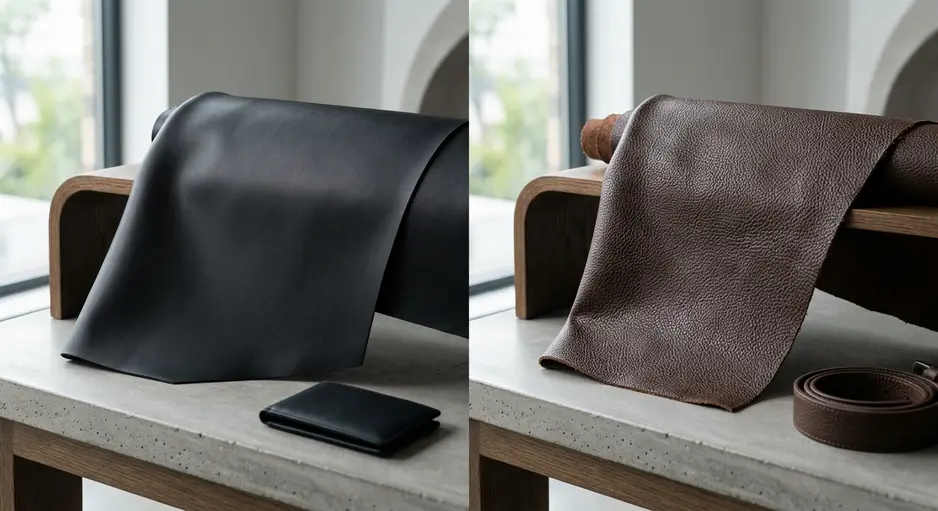
Synthetic leather usually has a textile backing coated with polyurethane, PVC, or another polymer system. The backing provides strength, while the coating creates the color, feel, and protective surface.
Synthetic leather texture refers to the visible and tactile character of that surface. Manufacturers can change it through coating, embossing, release paper, topcoats, and finishing methods. Texture matters, but it is only one part of the material’s construction.
What Is Smooth Synthetic Leather?
Smooth synthetic leather has a flat, uniform, or lightly textured face. It may be matte, glossy, soft, or polished. A smooth finish leatherette often suits spaces and products that need a clean, contemporary appearance.
Smooth PU leather is a common example. It can provide even color reflection and a soft hand. Its low-profile surface is also easy to wipe. However, dust, fingerprints, scratches, and coating flaws may be more visible, especially on dark or glossy colors.
What Is Grain Embossed Synthetic Leather?
Grain embossed synthetic leather receives its pattern through heat and pressure. An embossing roller or release paper forms a leather grain texture in the coating. Common options include fine grain, pebble grain, Saffiano-style patterns, automotive grain, and natural hide-inspired designs.
This embossed faux leather can reproduce the depth and character of genuine leather without using animal hide. Fine grains look subtle, while bold patterns create a more rugged or decorative effect.
Smooth vs Grainy Synthetic Leather Comparison
Quick Comparison
- Appearance: Smooth material looks sleek and uniform. Grainy material looks detailed and more natural.
- Cleaning: A flat surface is generally faster to wipe. Deep grain recesses may hold dust or residue.
- Scratch visibility: Marks often stand out on a polished surface. Texture can disguise light scuffs.
- Feel: Smooth material feels flat, soft, or polished. Grainy material offers more tactile interest.
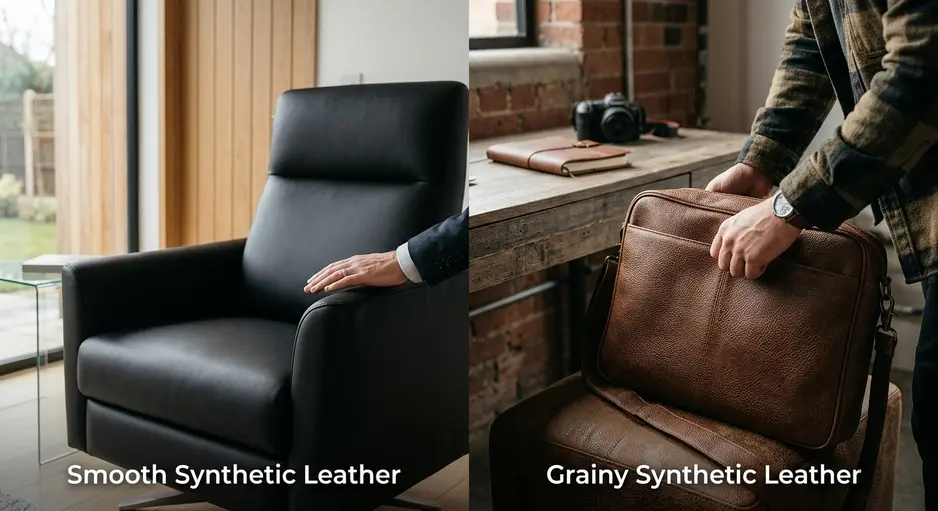
- Typical uses: Smooth finishes work well for panels, fashion, and modern furniture. Grainy finishes are common in seating, bags, footwear, and vehicle interiors.
- Design style: Smooth finishes feel minimalist or technical. Grain patterns can appear classic, rugged, or premium.
Appearance and Faux Leather Texture
A smooth surface reflects light more evenly, so color may appear consistent across a large panel. Grain creates small areas of light and shadow. These details give the surface more depth and can make it look closer to natural leather.
Texture is not the only visual factor. Gloss, color, coating clarity, drape, and softness also shape the final impression. A matte smooth finish can look refined, while an overly glossy grain may appear less natural.
Cleaning and Maintenance
Smooth surfaces are usually easier to clean because there are fewer recesses where dirt can settle. Grainy material may need a soft cloth or gentle brush to remove residue from the pattern.
Always follow the supplier’s cleaning instructions. Harsh solvents, rough brushes, and unapproved disinfectants may damage the topcoat. Test any cleaner on a hidden area before using it across the finished product.
Which Finish Hides Scratches Better?
Grainy synthetic leather generally hides superficial scratches and everyday scuffs better. The pattern breaks up visible marks. On a highly smooth or glossy surface, scratches, fingerprints, and abrasion may be easier to notice.
That does not mean grainy material resists damage better. Scratch visibility also depends on the topcoat, color, gloss, and contrast between the surface and the layer below.
Is Grainy Synthetic Leather More Durable?
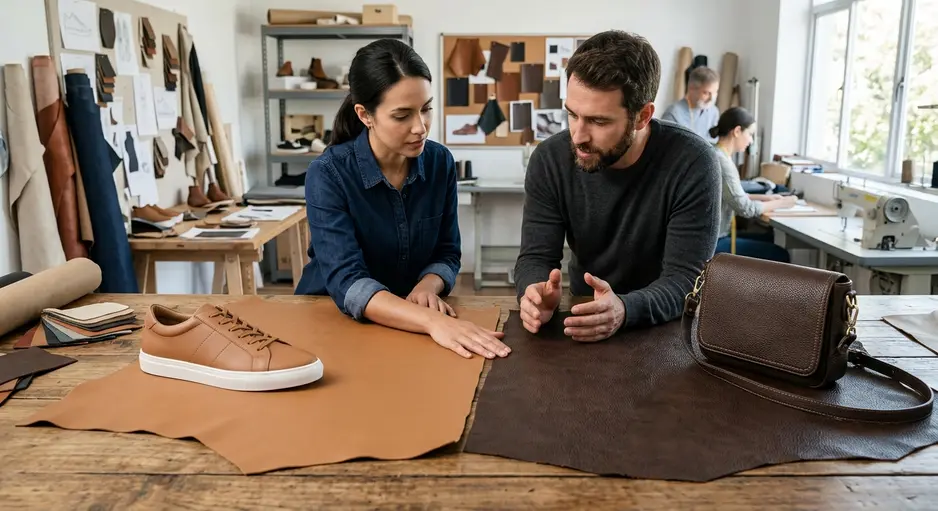
Short answer: not necessarily. Grain can conceal wear, but it does not guarantee a longer service life. Real durability comes from the complete material construction and its tested performance.
Factors That Determine Real Durability
- PU, PVC, or blended coating formulation
- Coating thickness and layer construction
- Strength and stability of the textile backing
- Topcoat quality and chemical resistance
- Flex and cold-crack resistance
- Coating adhesion and tensile performance
- Hydrolysis, UV, and colorfastness performance
- Abrasion, stain, and scratch resistance
There is also a difference between looking worn and physically failing. A grain pattern may hide light abrasion even when two materials have similar test results. Buyers should compare the test method, conditions, and pass criteria instead of relying on an abrasion-cycle number without context.
PU Leather Material vs PVC Leather Fabric
PU leather material is often selected for its soft feel, drape, and design flexibility. PVC leather fabric may suit projects that prioritize cost control, water resistance, and robust cleaning. Formulations vary, so neither option is universally better.
Chemical compliance and environmental requirements also differ by product and market. An abrasion-resistant synthetic leather should be reviewed against the intended use, relevant regulations, and recognized ASTM or ISO methods where applicable.
Which Texture Is Best for Upholstery and Automotive Use?
Best Synthetic Leather for Upholstery
The best synthetic leather for upholstery must match the expected level of contact and care. Residential sofas, restaurant booths, office chairs, hotel seating, and healthcare furniture do not face the same conditions.
For high-contact furniture upholstery material, a fine or medium grain often provides a useful balance. It looks natural, disguises minor wear, and remains easier to clean than a very deep pattern. Still, buyers should review abrasion resistance, stain resistance, flex performance, colorfastness, cleanability, comfort, and applicable fire requirements.
Automotive Seat Leather
Grainy finishes are often associated with automotive seat leather because they resemble natural hide and reduce the visibility of light scuffs. Smooth finishes can suit accent panels, door inserts, headliners, and modern interior concepts.
Automotive buyers should ask for data on UV exposure, heat ageing, cold-crack performance, abrasion, odor, fogging, color transfer, and flammability. FMVSS 302 may be relevant for applicable vehicle interior materials, while other markets and manufacturers may have additional requirements.
Real-World Application Examples
- Restaurant booth: Fine-grain, stain-resistant upholstery leather fabric
- Minimalist lounge chair: Matte smooth material with an even finish
- Family sofa: Medium-grain material designed for regular cleaning
- Vehicle seat: Grain-embossed product supported by automotive test results
- Decorative wall panel: Smooth or lightly textured material for visual consistency
Smooth and Grainy Faux Leather Applications
Applications of Smooth Synthetic Leather
The uniform face of smooth material works well where precise color, clean lines, or printing matters. Common applications include:
- Modern furniture and decorative panels
- Handbags and small fashion accessories
- Footwear accents and fashion garments
- Bookbinding, stationery, and retail displays
- Institutional surfaces designed for easy cleaning
Because the surface has little visual interruption, small differences in gloss or color may be noticeable. Production sample approval is important when several panels must match.
Benefits of Grain Embossed Leather
Textured synthetic leather offers a more natural appearance, added tactile interest, and better concealment of light marks. Custom grain patterns also give designers more control over the final style.
These benefits make grain finishes suitable for furniture, luggage, automotive interiors, footwear, and accessories. A bold pattern can create a rugged look, while a fine grain may feel understated and refined.
Waterproof Faux Leather and Outdoor Use
Synthetic leather is often water resistant, but it should only be called waterproof faux leather when specifications support that claim. Water can also enter through seams, stitching holes, edges, or the backing.
Outdoor and marine products may require weather-tested topcoats, UV resistance, mildew resistance, and suitable seam construction. A grainy face alone does not make a product fit for exterior use.
How Do You Choose the Right Synthetic Leather Texture?
A Six-Step Selection Checklist
- Define the application. Confirm whether the material is for furniture, vehicle seating, fashion, footwear, panels, or hospitality use.
- Estimate wear levels. Busy public seating needs different performance from a decorative wall surface.
- Choose the visual direction. Select smooth for clean styling or grainy for depth and a leather-like character.
- Review cleaning needs. Consider food, oils, cosmetics, disinfectants, sweat, and outdoor contaminants.
- Check technical data. Request relevant abrasion, flex, adhesion, hydrolysis, tensile, lightfastness, and flammability results.
- Test a representative sample. View it under actual lighting and apply it to the intended foam, substrate, or prototype.
Questions to Ask a Synthetic Leather Manufacturer
- Is the construction PU, PVC, semi-PU, or another system?
- What backing fabric and coating thickness are used?
- Which test method supports each performance claim?
- Is the product suitable for the target market and application?
- Can the grain, color, gloss, thickness, and backing be adjusted?
- What are the sample, minimum order, production, and lead-time terms?
- How is color and grain consistency controlled between batches?
Choosing an International Supplier
When comparing an international synthetic leather supplier, ask for technical data sheets, available test reports, sample approval steps, and market-specific documentation. Buyers should also review traceability, quality-control processes, packaging, shipping experience, and communication during development.
Buyers seeking a synthetic leather exporter worldwide can contact Rock Uniquoters to discuss intended applications, finishes, colors, backing options, and sourcing requirements.
Smooth vs Grainy Synthetic Leather
Make the Finish Fit the Application
Choose a smooth finish for clean styling, even color, and simple wiping. Choose a grainy finish for visual depth, tactile appeal, and better concealment of everyday scuffs. In either case, premium synthetic leather is defined by suitable construction and verified performance—not surface appearance alone.
Need help comparing smooth PU leather, grain embossed synthetic leather, or application-specific upholstery materials? Contact Rock Uniquoters to discuss texture, color, backing, performance, and supply requirements.
Frequently Asked Questions
1. Does Grainy Faux Leather Last Longer?
Not by default. Its pattern can make light wear less visible, but service life depends on the topcoat, backing, coating formulation, adhesion, flex resistance, abrasion performance, environment, and maintenance.
2. Is Smooth Synthetic Leather Easier to Clean?
It is generally easier to wipe because it has fewer recesses where dust and residue can collect. Actual cleanability also depends on the topcoat, stain type, and cleaning product. Always use approved care methods.
3. Which Synthetic Leather Looks Most Like Genuine Leather?
A well-made grain embossed finish usually resembles genuine leather more closely because it can reproduce pores, wrinkles, and natural-looking variation. Softness, drape, color, and gloss also affect how realistic it appears.
4. Is PU or PVC Synthetic Leather Better for Furniture?
PU may provide a softer hand and flexible styling. PVC may suit furniture that needs water resistance, cost efficiency, or frequent cleaning. The better choice depends on comfort, budget, care needs, regulations, and performance specifications.
5. What Texture Is Best for High-Traffic Upholstery?
A fine or medium grain is often practical because it hides minor scuffs while remaining fairly easy to clean. Texture alone is not enough, so confirm abrasion, flex, stain, adhesion, and chemical-resistance results.