
06 August, 2026
Luxury is judged by sight, touch, and performance. A bag may have a beautiful shape, but its surface gives the first impression of quality. Texture also affects scratch visibility, structure, maintenance, and how the product ages.
The top leather texture finishes range from soft nappa and clean smooth surfaces to durable pebble, litchi, and saffiano patterns. Premium synthetic options can create many of the same effects. The best choice depends on how the bag or accessory will be used, not appearance alone.
What Is a Leather Texture Finish?
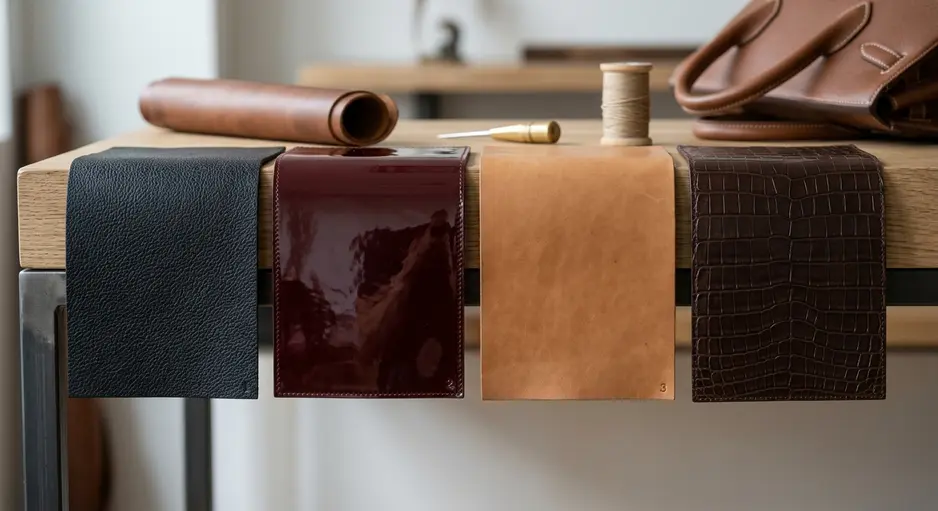
Texture, grain, and finish are different
These terms are often used as if they mean the same thing, but each describes a different part of the material.
- Grain is the natural or reproduced pattern seen on the surface.
- Texture is the material’s visual and tactile character.
- Finish is a coating, treatment, or effect applied to the surface.
Full grain and top grain describe the structure or grade of natural leather. Pebble, saffiano, litchi, and crocodile describe surface patterns. Matte, patent, waxed, and vintage describe treatments or visual effects.
Embossing can create a regular grain leather texture on genuine leather, coated leather, or a synthetic base. For this reason, a named texture does not prove the composition or quality of a material.
Why texture matters in luxury accessories
The selected texture shapes brand identity and hand feel. It also influences scratch visibility, cleaning, color consistency, cutting yield, and shape retention. Deep patterns can hide minor marks, while smooth surfaces place more focus on precise construction.
Top Leather Texture Finishes for Luxury Bags and Accessories
Pebble grain leather
Pebble grain has a rounded, irregular surface that feels soft yet practical. Its raised pattern helps disguise light scratches, creases, and marks from frequent handling. It works well for everyday totes, backpacks, crossbody bags, and luggage.
Natural pebbling comes from the hide itself, although it may be enhanced during production. Embossed pebble grain uses pressure and patterned plates to create a more uniform result. Both can look premium when the grain is clear and the finish remains flexible.
Saffiano leather texture
Saffiano is known for its fine crosshatch pattern and structured appearance. It is often chosen for office bags, wallets, travel pieces, and formal handbags. A suitable coating may offer resistance to light scratches and splashes, but performance should be confirmed through testing.
Saffiano describes a texture rather than one specific material. The pattern can be applied to genuine leather, coated leather, or synthetic substrates.
Nappa leather finish
Nappa generally refers to leather with a smooth, soft, and supple feel. It is associated with refined clutches, trims, linings, gloves, and small leather goods. Its softness makes a product pleasant to hold, but the surface may show scratches more readily than a heavy embossed texture.
The term is not a universal quality grade. Buyers should still review thickness, coating, colorfastness, and the exact material specification.
Crocodile-embossed leather
A crocodile embossed leather surface creates a bold, exotic-inspired look without necessarily using exotic animal skin. It is suited to evening bags, belts, watch straps, wallets, and accent panels.
Pattern scale should match the product. Small accessories often need a finer repeat, while large panels can carry wider scales. Clean embossing depth and natural-looking variation improve the result. Brands should clearly disclose the base material.
Litchi leather texture
Litchi texture has a rounded, fruit-skin-inspired grain similar to fine pebbling. It combines visual depth with a soft appearance and practical wear. This balance makes it useful for handbags, cosmetic cases, organizers, wallets, and other fashion accessories.
Smooth leather finish
A smooth surface creates a clean, modern look linked with minimalist and quiet-luxury design. It highlights the quality of the material, stitching, and panel construction. It can also reveal scratches, coating flaws, and uneven color more easily.
Smooth finishes are a strong choice for formal clutches, controlled-use handbags, and premium accessories where careful handling is expected.
Patent leather finish
Patent leather has a glossy coated surface with strong visual impact. It is often used for evening bags, statement pieces, trims, and seasonal collections. Its shine can make color look rich and polished.
Fingerprints and scuffs may be visible. Poor coatings may also crack at repeated folds or develop color transfer during storage. Flexibility, blocking, and migration tests are important before production.
Matte and vintage leather effects
A matte leather finish offers a restrained, modern appearance with low surface shine. Vintage effects may use waxed, pull-up, distressed, or two-tone treatments. They suit travel goods, messenger bags, heritage collections, and unisex accessories.
Some color movement and surface variation may be intentional. Brands should define an acceptable appearance range so a planned vintage leather effect is not mistaken for a defect.
What Is the Best Leather Texture for Each Accessory?
Luxury handbags and totes
Pebble grain, litchi, and saffiano are practical options for bags that receive frequent handling. They add depth while helping conceal small marks. Smooth and nappa finishes suit refined designs with lower abrasion. Structured bags may also need backing that supports shape retention.
Wallets and small leather goods
Saffiano and fine embossing can provide a consistent surface for wallets and card holders. Nappa offers the soft hand associated with luxury wallet leather. In both cases, buyers should test fold endurance and coating behavior around creases.
Belts, straps, and handles
These parts experience repeated flexing, moisture, and hand contact. Flex resistance, edge durability, seam strength, and finish adhesion matter more than pattern alone. A deep texture should not interfere with stitching or edge paint.
Cosmetic cases and travel accessories
A water-resistant leatherette or coated synthetic surface may be easier to wipe clean. Pebbled and crosshatch patterns also help hide wear from travel. Any water-resistant or scratch-resistant claim should be supported by relevant test results.
For example, a smooth surface may elevate a formal clutch. A pebble texture or premium PU material is often more practical for an everyday tote.
Is Smooth or Textured Leather Better for Bags?
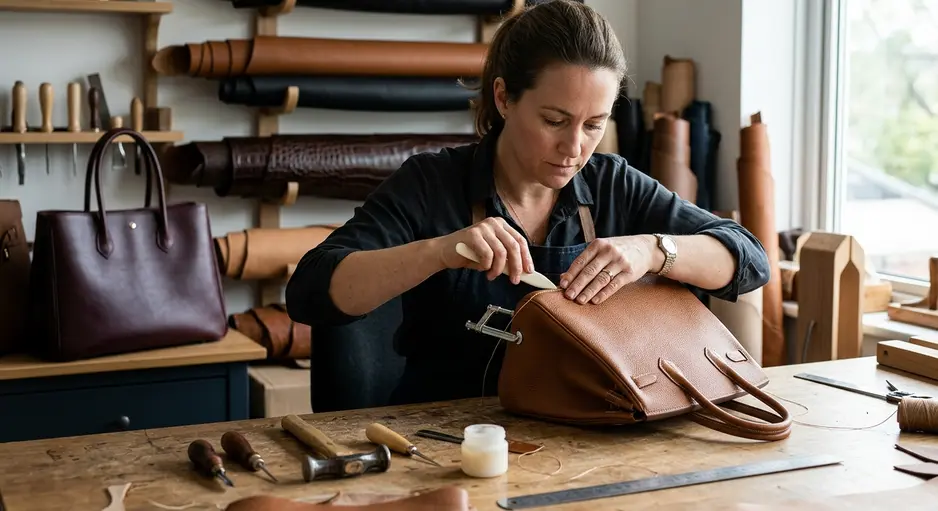
Smooth versus textured leather
- Appearance: Smooth leather looks minimal and refined. Textured leather appears dimensional and tactile.
- Scratch visibility: Marks are usually easier to see on smooth surfaces. Grain patterns can conceal light wear.
- Cleaning: Smooth material is easy to wipe, but stains may stand out. Dirt can settle inside a deep texture.
- Consistency: Smooth surfaces reveal flaws. Embossing may create a more uniform appearance.
- Best use: Smooth finishes suit formal pieces. Textured finishes suit everyday bags and travel goods.
Choose smooth leather when clean lines and a refined surface define the design. Select a textured finish when scratch concealment, regular appearance, and frequent handling are priorities. The best leather finish for luxury bags is the one that matches the product’s use and expected care.
Can Faux Leather Look and Feel Luxurious?
Premium synthetic leather finishes
Yes. Well-developed synthetic leather can offer consistent grain, even color, low material variation, custom embossing, and easy batch replication. It may also support lightweight construction and a water-resistant surface.
Luxury faux leather for bags is available in pebble, saffiano, litchi, matte, metallic, smooth, and crocodile-inspired effects. However, not every synthetic material is durable or environmentally preferable. Claims should be based on its composition, production process, and verified performance.
What separates premium PU from low-quality material?
Premium synthetic leather finishes depend on more than the top coating. Important factors include backing strength, coating formulation, grain definition, flexibility, hand feel, and adhesion between the coating and substrate.
Buyers should also review hydrolysis resistance, odor, abrasion results, and restricted-substance compliance. A scratch-resistant faux leather sample may hide marks well yet still fail if its coating peels after repeated flexing.
Textured faux leather for fashion accessories
Textured faux leather can be used for handbags, belts, wallets, organizers, cases, and decorative panels. It gives designers control over pattern, color, gloss, thickness, and backing. A prototype is still essential because the same material may behave differently on a flat wallet and a tightly folded handle.
How Do Professionals Evaluate a Leather Finish?
Test performance, not just appearance
A beautiful swatch is only the first step. Test methods and acceptance levels should reflect the product, construction, target market, and expected service life. Buyers commonly request information on:
- Abrasion and flex resistance
- Dry and wet rub colorfastness
- Coating adhesion
- Tear and tensile strength
- Hydrolysis resistance for PU material
- Water spotting and water resistance
- Heat and light aging
- Color migration and surface blocking
- Seam, bonding, and edge-finish compatibility
Recognized ISO or SATRA methods may be suitable, depending on the product. Chemical requirements can also involve REACH, the ZDHC Manufacturing Restricted Substances List, or rules in the intended sales market.
Review texture consistency
Inspect embossing depth, pattern repeat, grain alignment, gloss, color variation, backing uniformity, and thickness tolerance. Fold the sample and see how quickly the surface recovers. Check several areas rather than judging one small section.
Test the material in production
- Order swatches in the shortlisted colors and textures.
- Create sample panels or a complete prototype.
- Test stitching, folding, skiving, bonding, and edge paint.
- Flex stress points such as handles, straps, and wallet folds.
- Compare the approved sample with bulk material.
- Keep a signed reference sample for quality control.
How to Choose a Leather Texture Exporter Worldwide
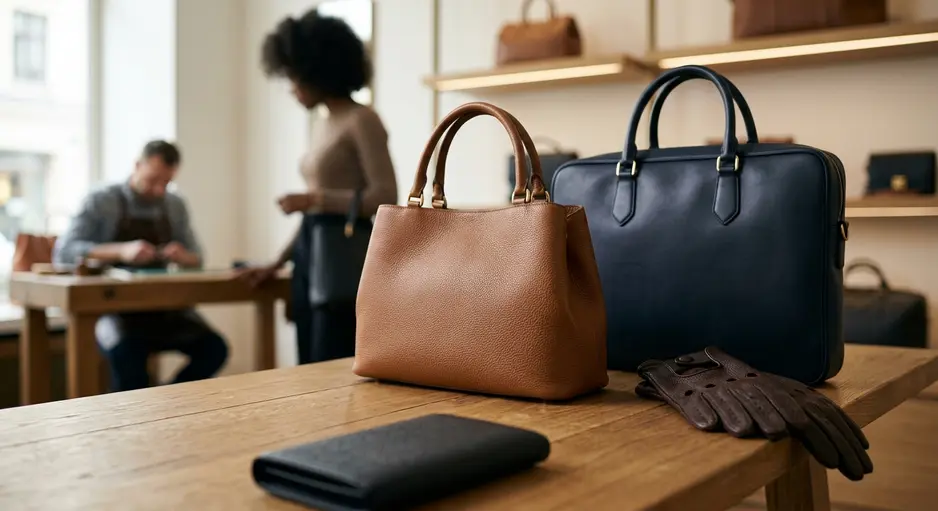
When comparing a supplier or leather texture exporter worldwide, ask for clear technical information rather than relying on product photos. Useful questions include:
- Can technical specifications and relevant test reports be provided?
- Are custom color, grain, gloss, thickness, and backing options available?
- What are the sampling process and minimum order requirements?
- How is lot-to-lot consistency controlled?
- Can each delivery be traced to its production batch?
- Which chemical and labeling requirements are supported?
- Are recycled, vegan, water-resistant, or scratch-resistant claims documented?
Buyers comparing leather texture finishes can contact Rock Uniquoters through its website to request available product information, then assess each option against their design, performance, and market requirements. Samples should be approved before any bulk purchasing decision.
Choose Texture with Purpose
The most attractive leather texture for fashion accessories must also work in daily use. Pebble and litchi offer practical depth, saffiano supports structured designs, and nappa provides a soft luxury feel. Smooth, patent, matte, and embossed surfaces each create a distinct brand statement.
Whether the base is natural leather or premium synthetic material, review its composition, test data, production behavior, and consistency. The top leather texture finishes are not simply the most fashionable options. They are the finishes that protect the design, meet performance needs, and give customers the quality they expect from premium accessories.
Frequently Asked Questions
1. Which leather texture is most scratch-resistant?
Coated crosshatch, saffiano, pebble grain, and certain tested synthetic surfaces often resist or conceal light scratches better than smooth finishes. Actual performance depends on coating quality, material construction, use, and verified abrasion results.
2. Is pebble grain leather good for luxury handbags?
Yes. Its tactile surface and ability to disguise minor wear make it suitable for premium everyday handbags. Quality still depends on the base material, embossing, finish flexibility, stitching, and overall bag construction.
3. Is saffiano leather always genuine leather?
No. Saffiano mainly describes a crosshatch surface pattern. It can be produced on genuine leather, coated leather, or synthetic material. Check the composition label and supplier specification before making material claims.
4. Does embossed leather last longer than smooth leather?
Not automatically. An embossed leather texture may hide scratches and improve visual consistency, but longevity depends on coating adhesion, flex resistance, construction, maintenance, and the quality of the base material.
5. What is the best faux leather texture for luxury bags?
Fine pebble, litchi, saffiano, and matte PU textures are popular choices. The right option should combine a premium hand feel with tested resistance to abrasion, flexing, hydrolysis, cracking, and peeling.