
04 May, 2026
Synthetic leather has evolved from a low-cost alternative to genuine leather into a high-performance material used across furniture, automotive, footwear, and industrial applications. Synthetic leather transforms supply chains through durability, design flexibility, and cost efficiency.
Today, understanding synthetic leather types and their applications is essential for retailers, sourcing managers, and product designers. This guide breaks down manufacturing methods, performance standards, and synthetic leather uses across industries along with a practical buying framework for commercial buyers.
What Is Synthetic Leather?

Synthetic leather, also known as faux leather or leatherette, is a man-made material designed to replicate the look and feel of natural leather. It is typically produced by coating a fabric backing with polyurethane (PU), polyvinyl chloride (PVC), or advanced microfiber compounds.
How Synthetic Leather Is Made
The production process varies depending on material composition and intended use. Based on extensive industry work with synthetic leather suppliers for B2B, here’s how the major categories are manufactured:
- PU coated fabric characteristics: A fabric base is coated with polyurethane, creating a soft, flexible finish suitable for fashion and upholstery.
- PVC-based leatherette production: Vinyl layers are applied to polyester fabric, offering higher water resistance and durability.
- Microfiber synthetic leather technology: Ultra-fine fibers simulate real leather structure, ideal for premium automotive industry.
- Laminated synthetic leather for handbags: Decorative films and embossed layers are heat-laminated for aesthetic versatility.
Synthetic Leather vs Genuine Leather: Key Differences
Buyers frequently ask how faux leather types PU PVC microfiber compare with genuine leather. The answer depends on use case and performance standards.
- Durability: High-grade microfiber rivals natural leather in abrasion resistance.
- Imitation leather durability test: Martindale abrasion and tensile strength tests determine performance benchmarks.
- Cost: Synthetic options are typically 30-50% more economical.
Why Synthetic Leather Is Dominating Global Markets
Growth is fueled by vegan leather materials and sustainability initiatives. Many Indian manufacturers now follow recycled synthetic leather manufacturing process standards and meet export synthetic leather quality standards India requires.
Synthetic Leather Types List
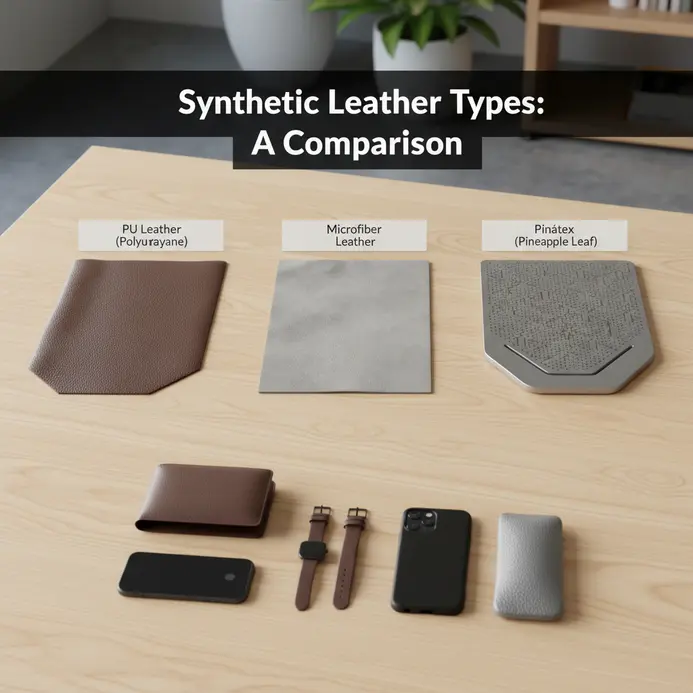
PU Leather (Polyurethane Leather)
PU leather is widely used due to its softness and breathability. In the ongoing PU leather vs PVC leather comparison, PU stands out for flexibility and aesthetic finish.
- Lightweight and soft-touch surface
- Breathable synthetic leather technologies available
- Ideal for fashion and vegan leather for shoes manufacturers
PVC Leather
PVC leather offers higher resistance to moisture and heavy wear. It is commonly used in waterproof leather for outdoor use and marine environments.
- Strong and abrasion-resistant
- Flame-retardant synthetic leather options available
- High-performance synthetic leather for marine applications
Microfiber & Advanced Synthetic Leather
Microfiber is considered premium-grade. Automotive OEMs often choose it as the best synthetic leather for car seats.
- Excellent tensile strength
- Embossed synthetic leather patterns for interiors
- High resistance to heat and UV exposure
Eco-Friendly & Recycled Alternatives
Eco-friendly synthetic leather alternatives include bio-based coatings and recycled substrates.
Synthetic Leather Uses Across Industries
Furniture & Upholstery
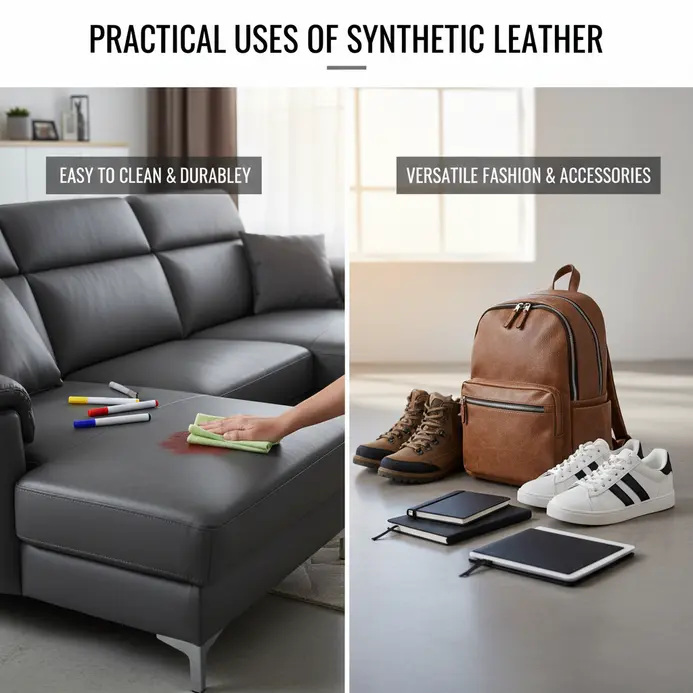
Faux leather upholstery for furniture is one of the largest application segments. Proven strategies include selecting materials based on abrasion cycles and backing fabric strength.
- Leatherette upholstery care instructions improve lifespan
- How to choose synthetic leather for upholstery depends on traffic level
- Wholesale synthetic leather rolls for upholstery reduce per-meter costs
Automotive Applications
Automotive-grade materials must pass strict abrasion and heat resistance standards. Based on my sourcing projects, microfiber variants consistently outperform standard PU.
- Best synthetic leather for car seats offers UV resistance
- Meets automotive tensile benchmarks
- Maintains color fastness under heat
Footwear & Fashion Accessories
Vegan leather for shoes manufacturers is growing rapidly. Synthetic leather for fashion accessories manufacturers allows custom finishes and laminated synthetic leather for handbags.
Commercial & Industrial Applications
Applications include aviation seating, hospitality furniture, and waterproof synthetic leather for outdoor use in public infrastructure projects.
One case study involved synthetic leather exporter & suppliers in India scaling automotive exports by upgrading finishing lines and meeting EU flame-retardant standards resulting in a 40% revenue increase within two years.
Synthetic Leather Buying Guide for Retailers & B2B Buyers
Step 1 - Identify End Use & Performance Requirements
- Indoor vs outdoor exposure
- Load-bearing vs decorative use
- Abrasion resistance benchmarks
Step 2 - Evaluate Technical Specifications
- Check GSM and thickness
- Review PU coated fabric characteristics
- Assess breathability and flexibility
Step 3 - Check Supplier Credentials
Always vet synthetic leather suppliers for B2B based on compliance and export capability. Reliable synthetic leather exporter & suppliers in India provide ISO certifications and test reports.
Step 4 - Understand Pricing & MOQ
The synthetic leather price per meter in India varies depending on thickness and finish. On average:
- Standard PU: Competitive mid-range pricing
- Microfiber: Premium segment
- PVC heavy-duty grades: Higher for marine or outdoor use
Negotiating wholesale synthetic leather for upholstery can reduce the synthetic leather price per meter India significantly for bulk buyers.
Common Mistakes to Avoid When Buying Synthetic Leather
Choosing Based on Price Alone
Low-cost materials may fail abrasion tests, increasing long-term replacement costs.
Ignoring End-Use Requirements
Using indoor-grade material outdoors leads to cracking and discoloration.
Overlooking Export Quality Standards
Export synthetic leather quality standards in India include REACH compliance and flame-retardant certifications.
Not Testing Custom Orders
Custom printed synthetic leather for product design must undergo sampling and durability testing before full production.
Best Practices & Industry Standards in Synthetic Leather Manufacturing
Durability & Performance Testing Methods
- Imitation leather durability test (Martindale)
- Tensile and tear strength testing
- Color fastness under UV exposure
Synthetic Leather Finishing Techniques
- Embossing for leather texture
- Protective top coatings
- Advanced lamination for durability
Sustainability & Environmental Compliance
Manufacturers increasingly adopt recycled synthetic leather manufacturing process standards and VOC reduction technologies.
Buy High-Quality Synthetic Leather for Better Performance
Conclusion
Understanding synthetic leather, its manufacturing process, and performance benchmarks allows businesses to source smarter and scale faster. In over a decade of experience advising B2B buyers, the most successful companies prioritize quality testing, supplier credibility, and end-use alignment.
Whether you are evaluating a synthetic leather types list, comparing PU leather vs PVC leather, or negotiating synthetic leather price per meter in India, informed sourcing decisions directly impact profitability and product longevity. Choose strategically, test rigorously, and partner with experienced suppliers to maximize returns in today’s competitive global market.
FAQs
1. Is synthetic leather better than real leather?
For commercial scalability and cost control, synthetic leather often offers better consistency and lower maintenance.
2. What are the main synthetic leather types?
The primary synthetic leather types include PU, PVC, and microfiber variants.
3. Is PU leather better than PVC leather?
In a PU leather vs PVC leather comparison, PU is softer while PVC is more water-resistant.
4. How long does synthetic leather last on furniture?
High-quality faux leather upholstery for furniture can last 5-10 years depending on usage and maintenance.
5. What is the synthetic leather price per meter India?
The synthetic leather price per meter India depends on grade, thickness, and order quantity.
6. Which synthetic leather is best for car seats?
Microfiber is typically considered the best synthetic leather for car seats due to strength and breathability.
7. Is synthetic leather waterproof?
PVC-based and treated grades provide waterproof synthetic leather for outdoor use and marine applications.